Installing a luxury refrigerator isn’t just about keeping food cold, it’s about transforming the most hardworking appliance in the home into a centerpiece that combines performance, design, and technology. Unlike builder-grade models, high-end refrigerators offer precise climate zones, whisper-quiet compressors, and finishes that rival custom cabinetry. They’re engineered for homeowners who need commercial-grade food preservation without sacrificing aesthetics. Whether planning a full kitchen remodel or upgrading a single appliance, understanding what separates luxury models from standard units helps buyers make informed decisions that’ll last 15-20 years or more.
Table of Contents
ToggleKey Takeaways
- A luxury refrigerator combines precision engineering—like dual evaporators and variable-speed compressors—with premium construction materials such as reinforced hinges and tempered glass shelves, justifying its higher cost through measurable performance and longevity.
- Focus on features that genuinely preserve food (temperature-controlled zones, air purification, rapid chill functions) rather than gimmicks like built-in soda makers; skipping unnecessary add-ons reduces complexity and long-term maintenance costs.
- Verify home infrastructure before purchasing—measure door clearance through delivery paths, confirm dedicated 20-amp electrical circuits are available, and check for accessible plumbing within 10 feet if the model includes ice/water dispensers.
- French-door configurations dominate luxury refrigerator sales because they maximize usable shelf width for large items, reduce cold air loss, and improve visibility; however, measure your kitchen’s exact width and height before commitment.
- Smart connectivity features like internal cameras and touchscreen displays deliver real value only when integrated with your actual cooking workflow; prioritize models with standard voice assistant compatibility over proprietary apps that may lose support.
- Budget $800–1,500 for professional installation of built-in luxury refrigerator models, accounting for cabinet modifications, ventilation channels, and potential electrical upgrades to protect your 15-20 year investment.
What Makes a Refrigerator ‘Luxury’?
Luxury refrigerators distinguish themselves through three core elements: build quality, performance engineering, and customization options. Price alone doesn’t define luxury, a $5,000 freestanding unit with basic features isn’t inherently better than a $3,000 model with superior insulation and compressor technology.
Construction materials set the foundation. High-end units use thicker gauge stainless steel (18-gauge or better), reinforced door hinges rated for 100,000+ cycles, and commercial-grade gaskets that maintain seal integrity for decades. Interior bins and shelves are often tempered glass with spill-proof edges, not wire racks. Crisper drawers feature ball-bearing slides rather than plastic tracks.
Compressor and cooling systems represent the most significant engineering difference. Luxury models employ dual or triple evaporators, separate cooling systems for refrigerator and freezer compartments, that prevent odor transfer and maintain optimal humidity levels independently. Variable-speed compressors adjust cooling output in 1% increments rather than cycling on/off, reducing temperature fluctuations to ±0.5°F instead of the ±3°F swing in standard models.
Panel-ready and integrated options allow seamless cabinet matching. True built-in refrigerators sit flush with cabinetry (24-inch maximum depth) and require custom ventilation channels, unlike counter-depth models that still protrude 2-3 inches. This integration requires proper planning during kitchen layout, you can’t retrofit a built-in without modifying cabinet runs and possibly relocating plumbing or electrical.
Noise levels separate premium from budget units. Expect luxury models to operate at 38-42 decibels (library-quiet) versus 45-50 decibels for standard refrigerators. This matters in open-concept floor plans where kitchen noise carries into living spaces.
Top Features to Look for in High-End Refrigerators
Not all features justify their price premium. Focus on technologies that genuinely improve food preservation, reduce waste, or solve specific storage challenges in the household.
Advanced Temperature Control and Preservation Technology
Dual-zone temperature management goes beyond separate fridge/freezer controls. Premium units offer dedicated compartments with adjustable climates: a convertible drawer that switches from -6°F freezer to 41°F deli storage, or a humidity-controlled produce vault that maintains 95% humidity for leafy greens while keeping berries at 85%. Some models from luxury appliance brands include vacuum-sealed drawers that slow oxidation for meats and cheeses.
Air purification systems actively filter ethylene gas and bacteria rather than just masking odors. Look for units with replaceable carbon/mineral filters rated for 6-month intervals. This extends produce life by 3-5 days on average, meaningful for households that meal prep or buy in bulk.
Rapid chill and freeze functions drop temperatures quickly when loading room-temperature groceries. A quality blast-chill mode hits 38°F in under 30 minutes, preventing existing items from warming up. This matters after grocery runs with 10+ pounds of fresh food.
Skip gimmicks like built-in soda makers or automatic cocktail dispensers unless they solve a real need. These add mechanical complexity without improving core refrigeration performance.
Smart Connectivity and Touchscreen Displays
Internal cameras accessible via smartphone apps let users check inventory without opening the door, useful when grocery shopping, but only if the household actually uses the app consistently. Budget 5-10 minutes initially to photograph and label items clearly, or the feature becomes worthless.
Touchscreen interfaces on exterior doors provide calendar integration, recipe display, and music streaming. Practical value depends on kitchen workflow, if no one spends time cooking at home, a $800 screen upgrade delivers little return. When evaluating smart features, prioritize models that don’t require proprietary apps likely to lose support in 3-5 years. Units with open API integration or standard voice assistant compatibility (Alexa, Google Home) age better.
Energy monitoring in connected models tracks consumption patterns and alerts users to failing door seals or inefficient cooling cycles before utility bills spike. This feature pays for itself over a 15-year lifespan.
Remote temperature adjustment helps when traveling, drop the freezer to -10°F before a long absence to protect against power fluctuations, then return it to normal remotely before arriving home.
Popular Luxury Refrigerator Styles and Configurations
Configuration choice impacts installation requirements, kitchen workflow, and ongoing usability more than most buyers anticipate during showroom visits.
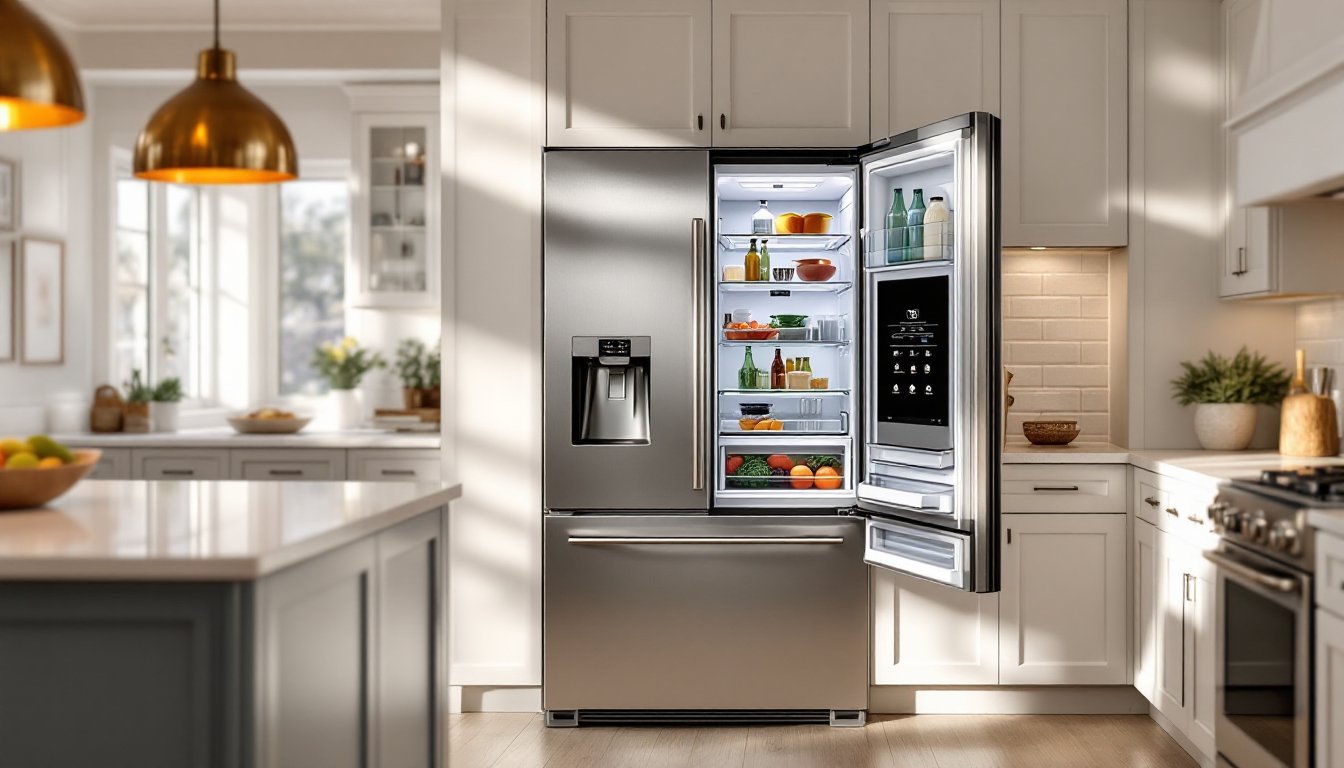
French-door models (two refrigerator doors over a bottom freezer drawer) dominate luxury sales for good reason: wide shelves accommodate sheet pans and pizza boxes, eye-level visibility reduces forgotten produce, and the split doors minimize cold air loss. Expect 20-28 cubic feet capacity. Installation requires 36-48 inches of width plus clearance for door swing, measure actual floor-to-ceiling space, not just the rough opening, since crown molding and floor transitions eat into usable height.
Side-by-side configurations provide full-height access to both fresh and frozen items without bending but limit shelf width to 12-14 inches, problematic for large platters or wide casserole dishes. These work well in galley kitchens where narrow door swings matter.
Column refrigerators separate fridge and freezer into distinct 24-inch or 30-inch-wide units installed independently. This allows flexible placement (freezer in pantry, fridge in kitchen) and simplifies replacement, when one unit fails in 15 years, the other keeps running. Trade-off: higher combined cost and two service calls for maintenance. Column units require professional installation with separate electrical circuits and water lines if both have ice makers.
Four-door and multi-drawer models (quad-door or drawer-style freezers) excel in household with multiple cooks who need simultaneous access. The additional compartments reduce door-open time by 30-40% compared to single-access freezers. But, more doors mean more gaskets to maintain and more hinge mechanisms to eventually service.
Undercounter drawer refrigerators supplement main units in work zones or outdoor kitchens. Premium 24-inch models integrate with cabinet panels and offer dedicated beverage cooling (38-40°F) or produce storage (high humidity). These require 15-amp dedicated circuits and proper ventilation, they can’t be fully enclosed.
How to Choose the Right Luxury Refrigerator for Your Home
Start with infrastructure, not features. The most advanced refrigerator means nothing if the home can’t support its requirements.
Measure three times: rough opening width/height/depth, door clearance through the delivery path (front door, hallways, kitchen entrance), and available floor space with doors fully open (90 degrees minimum, 120 degrees for full-extension drawers). Built-in models need 1-inch clearance on sides and top for ventilation, check manufacturer specs exactly. Improper clearance voids warranties and causes premature compressor failure.
Verify electrical capacity. Most luxury refrigerators pull 10-15 amps and require dedicated 20-amp circuits. If the kitchen panel is maxed out or still using 15-amp breakers, budget $300-800 for an electrician to run new lines before delivery. Models with through-door ice/water also need ¼-inch water supply lines with shut-off valves, confirm the home has accessible plumbing within 10 feet of the installation site.
Evaluate door swing direction in relation to countertop workflow and adjacent appliances. Most high-end models offer field-reversible hinges, but confirm before purchasing. A refrigerator with doors opening toward the primary work triangle (stove-sink-fridge) reduces steps and improves cooking efficiency.
Consider service accessibility. Luxury brands often require factory-trained technicians, verify authorized service providers operate within 50 miles of the home. Extended warranties cost 10-15% of purchase price but make sense for models with complex electronics or sealed systems that can’t be field-repaired. For inspiration on organizing storage zones, plan internal layout before installation, adjustable shelving should be configured based on household buying habits, not default factory settings.
Budget for installation: $200-500 for standard delivery and hookup, $800-1,500 for built-in models requiring cabinet modification or custom panels. Factor in haul-away fees for old units ($50-100) and potential floor repair if switching from different-sized models.
Conclusion
A luxury refrigerator represents one of the longest-lasting investments in a kitchen, choose based on verified performance, household workflow, and infrastructure compatibility rather than showroom appeal. Prioritize dual evaporators, quality construction, and realistic smart features over cosmetic upgrades. Proper installation with adequate ventilation and dedicated electrical circuits protects that investment. When the infrastructure is right and the features match actual cooking patterns, a premium refrigerator delivers measurable value for 15-20 years.