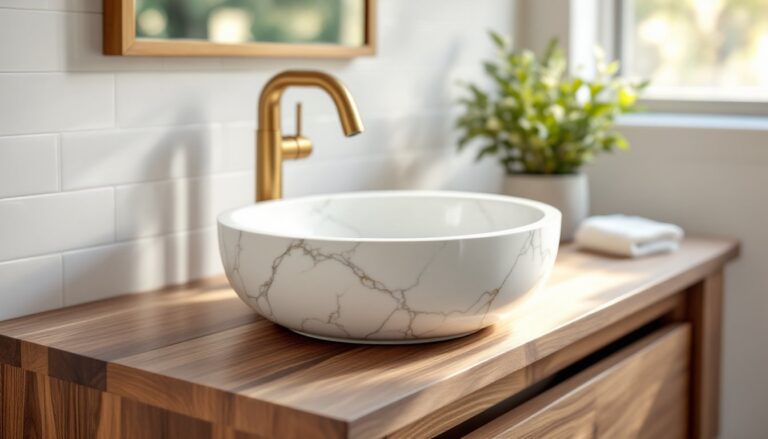

A luxury bathroom vanity isn’t just about storage, it’s the focal point that sets the tone for your entire bathroom. While budget vanities rely on particleboard cores and laminate finishes, high-end units distinguish themselves through solid construction, premium materials, and thoughtful design details that hold up decades later. The difference shows in everything from dovetail drawer joinery to the feel of a soft-close door. Whether you’re planning a full remodel or a strategic upgrade, understanding what separates luxury from standard helps you invest wisely in a piece that handles daily wear while adding real value to your home.
Table of Contents
ToggleKey Takeaways
- A luxury bathroom vanity sets itself apart through solid wood construction, premium materials like marble or engineered quartz, and high-quality hardware with dovetail joinery and soft-close mechanisms rated for decades of use.
- Natural stone countertops like Carrara marble and quartzite offer unmatched visual appeal for luxury vanities, while engineered quartz provides a durable non-porous alternative that never requires sealing.
- Luxury vanities typically range from 24–84 inches wide and 34–36 inches tall (comfort height), with deeper 24–26 inch depths to accommodate vessel sinks and thick countertop materials while maintaining proper bathroom clearance codes.
- Installation success requires professional anchoring for floating units, GFCI-protected electrical circuits, level flooring to prevent stone cracking, and coordinated plumbing rough-in to avoid costly modifications after delivery.
- Modern luxury bathroom vanity styles for 2026 include floating minimalist designs, transitional blends of traditional and contemporary elements, reclaimed wood rustic pieces, and two-toned cabinetry that add visual depth without overwhelming smaller bathrooms.
What Defines a Luxury Bathroom Vanity?
The line between a standard vanity and a luxury piece comes down to three core factors: materials, construction methods, and hardware quality.
True luxury vanities use solid wood frames (maple, oak, cherry, walnut) rather than MDF or particleboard. The cabinet boxes feature dovetail or mortise-and-tenon joinery, not staples or cam locks. Drawers glide on ball-bearing slides rated for 75-100 lbs, and doors close with hydraulic soft-close hinges that cycle 50,000+ times without failure.
Countertops matter equally. Luxury installations favor natural stone, engineered quartz, or solid surface materials over cultured marble or laminate. Edge profiles get upgraded from basic eased edges to beveled, ogee, or waterfall details.
Hardware separates the tiers too. Budget knobs use zinc alloy: luxury pulls feature solid brass, stainless steel, or bronze with hand-applied finishes. Many high-end vanities include integrated electrical outlets (GFCI-protected per NEC Article 406.12) and interior LED task lighting.
Finally, luxury vanities often ship as furniture-grade pieces with factory-finished interiors, adjustable shelving, and modular configurations that adapt to plumbing offsets without field modifications. Expect lead times of 6-12 weeks for custom orders.
Premium Materials That Make the Difference
Natural Stone and Marble Countertops
Carrara, Calacatta, and Statuary marble remain the gold standard for luxury vanities, offering veining patterns that vary slab to slab. Marble is porous (requires sealing every 6-12 months with a penetrating sealer) and etches on contact with acidic products, hairspray, perfume, and some cleaners will dull the finish. It’s not the most practical choice for kids’ bathrooms, but it’s unmatched for visual impact.
Quartzite (not to be confused with engineered quartz) delivers marble-like aesthetics with better scratch and etch resistance. It still needs sealing but tolerates abuse better than true marble.
Engineered quartz (Caesarstone, Cambria, Silestone) combines crushed stone with polymer resins for a non-porous surface that never needs sealing. It handles stains, won’t etch, and comes in consistent patterns, ideal if you’re matching multiple vanities. Trade-off: it lacks the depth and natural variation of stone, and heat over 300°F can damage the resin binder.
Soapstone offers a matte, soft-touch surface that darkens naturally with mineral oil treatments. It’s heat-proof and non-porous but scratches easily (minor scratches sand out with 220-grit paper).
Countertop thickness for luxury installs typically runs 2 cm (3/4″) or 3 cm (1-1/4″). Thicker slabs cost more but allow for dramatic edge profiles and integrated sinks.
Solid Wood Construction and Exotic Finishes
Cabinet construction in luxury vanities uses 3/4″ solid wood or hardwood plywood for sides, doors, and face frames. Popular species include:
- Walnut: Rich chocolate tones, open grain, pairs well with marble. Expect to pay 30-50% more than oak.
- White oak: Prominent grain, durable, takes stain evenly. Quarter-sawn cuts show ray fleck patterns.
- Cherry: Ages to a warm reddish patina, fine grain, premium pricing.
- Teak: Naturally water-resistant due to high oil content, ideal for humid bathrooms but expensive ($200-400+ per linear foot for quality cabinetry).
Finishes matter as much as species. High-end vanities use catalyzed conversion varnish or water-based polyurethane applied in multiple coats (80-120 microns dry film thickness) and buffed between coats. These finishes resist moisture, cleaners, and daily contact far better than basic lacquer or oil finishes. Hand-rubbed oil finishes look beautiful but require annual maintenance and aren’t ideal near sinks.
Many designers now specify furniture-style bases, vanities with legs or feet instead of toe kicks, drawing inspiration from sideboard-esque designs that blur the line between cabinetry and fine furniture.
Choosing the Right Size and Configuration
Standard vanity depths run 21-22″, but luxury units often stretch to 24-26″ to accommodate vessel sinks, thick stone, or extra storage. Verify your bathroom can handle the added projection, code requires minimum 30″ clearance from the vanity front to any opposite fixture or wall (IRC R307.1).
Width depends on sink configuration:
- Single-sink vanities: 24″ to 60″ wide. Below 36″, drawer space gets tight. Luxury single vanities typically start at 42″ to allow full-depth drawers beside the sink.
- Double-sink vanities: 60″ to 84″+ wide. Each sink needs minimum 30″ of centerline space for elbow room. Premium configurations place sinks 36-40″ apart for true separation.
Height standards have shifted. Old vanities sat at 30-32″, but modern luxury units run 34-36″ (comfort height, matching kitchen counter standards). Taller users prefer 36″: households with kids or shorter adults may want 34″ or a custom height. If you’re replacing an existing vanity, note that plumbing rough-in (drain centerline and supply locations) may not align with a different height without rework.
Configuration options expand with luxury lines:
- Floating (wall-hung) vanities require blocking installed between studs during framing. Anchor into at least two studs or a continuous 2×10 ledger board. These showcase the flooring and make cleaning easier but sacrifice storage.
- Tower cabinets or linen storage flanking the vanity create a built-in look. Plan for 18-24″ wide towers to store towels and toiletries.
- Open shelving below the countertop suits minimalist aesthetics but demands disciplined organization, everything shows.
Measure your space twice. Luxury vanities often ship as one-piece units that won’t fit through a 32″ door opening if they’re over 60″ wide. Verify door widths, hallway turns, and stair access before ordering.
Top Luxury Vanity Styles for 2026
Modern Minimalist: Clean lines, handleless doors (push-to-open mechanisms or integrated pulls), and floating installations. Finishes lean toward matte white, black, or natural wood with waterfall-edge quartz countertops. Pairs well with contemporary tile choices in large-format porcelain or textured stone.
Transitional: Blends traditional cabinetry (Shaker doors, subtle molding) with modern hardware and colors. Think navy or charcoal cabinets, brass or matte black fixtures, and marble or quartzite tops. This style adapts to changing trends without looking dated.
Rustic Modern: Reclaimed wood vanities (often teak, cedar, or barn wood) combined with concrete, stone, or copper vessel sinks. Live-edge slabs show natural cracks and knots. Ensure reclaimed wood is kiln-dried to 6-8% moisture content and sealed properly to prevent warping in humid environments.
Furniture-Style: Repurposed or purpose-built pieces (antique dressers, console tables) converted into vanities. Popular in powder rooms and primary suites where you want a one-of-a-kind statement. Requires skilled modification to route plumbing and seal surfaces. Not a beginner DIY, hire a finish carpenter if going this route.
Art Deco Revival: Bold geometric patterns, mirrored or lacquered finishes, gold or chrome accents, and dramatic veining in marble. Expect high-gloss surfaces that show fingerprints but photograph beautifully. Design inspiration often comes from high-end interior showcases featuring period-appropriate fixtures.
Two-toned cabinetry (e.g., dark lower cabinets, light upper storage or towers) continues trending. Mixing materials, wood base, painted tower cabinets, adds depth without overwhelming smaller bathrooms.
Installation Considerations for High-End Vanities
Luxury vanities weigh significantly more than stock units. A 72″ double-sink vanity with stone top can exceed 400 lbs. Floating installations must anchor into solid blocking or steel studs rated for the load. Standard drywall anchors won’t cut it.
Plumbing rough-in typically centers the drain 18-20″ from the back wall and supply lines 4″ apart, 20-22″ above the finished floor. High-end vanities with vessel sinks or integrated stone basins may shift these dimensions. Mock up the layout before finalizing plumbing.
Electrical for integrated outlets or lighting requires a GFCI-protected circuit if receptacles sit within 6 feet of a water source (NEC 210.8(A)(1)). Run wiring during rough-in: retrofitting behind a stone backsplash is costly.
Leveling matters more with luxury materials. Marble and quartz won’t flex to accommodate an uneven floor. Use shims and a 4-6′ level to ensure the cabinet sits plumb before securing. Uneven installations stress the stone and can crack it over time.
Sealing the backsplash and sidesplash with clear silicone (not latex caulk) prevents water intrusion behind the countertop. Luxury installations often include a 4-6″ stone backsplash or full-height tile, coordinate this before the vanity goes in to ensure proper flashing and waterproofing.
DIY vs. Pro: Installing a luxury vanity is within reach of an experienced DIYer if plumbing and electrical are already roughed in. You’ll need a second person for lifting, a level, shims, and basic hand tools. If you’re moving plumbing, cutting into stone, or installing a wall-hung unit, hire a licensed plumber and carpenter. Stone fabricators typically handle template and installation of the countertop, that’s not a DIY task.
Permits depend on scope. Replacing a vanity with no plumbing or electrical changes usually doesn’t require a permit, but always check local codes. Moving supply lines or adding circuits does.
For design ideas that integrate vanities with surrounding surfaces, explore projects on design platforms showcasing coordinated bath layouts.
Safety: Wear gloves and safety glasses when handling stone or cutting vanities. Use hearing protection if trimming with a circular saw. Secure heavy vanities to wall studs to prevent tip-over hazards, especially in homes with children.