A luxury sectional isn’t just furniture, it’s the anchor of a living space, the spot where family gathers, and often the biggest investment in a room. Unlike mass-market options, high-end sectionals combine premium materials, superior construction, and thoughtful design that can last decades. But with price tags ranging from $3,000 to well over $20,000, choosing the right one requires more than scrolling through catalogs. This guide walks through the materials, configurations, features, and maintenance strategies that separate true luxury pieces from expensive mistakes.
Table of Contents
ToggleKey Takeaways
- A luxury sectional sofa combines premium materials like kiln-dried hardwood frames, high-density foam, and eight-way hand-tied springs to deliver durability that lasts 20+ years, justifying price tags from $3,000 to $20,000+.
- Top upholstery choices include top-grain or full-grain leather ($6,000–$15,000), performance fabrics with 30,000+ double-rub counts, and high-quality velvet or linen, each requiring specific maintenance and offering distinct durability benefits.
- Choose an L-shaped sectional for standard living rooms (12×14 feet+), a U-shaped design for large square spaces (16×16 feet+), or modular pieces if you prioritize flexibility and frequently rearrange your space.
- Invest in features that enhance long-term comfort and usability—such as adjustable headrests, quality power mechanisms with battery backup, and seat depths of 26–28 inches—while skipping dated add-ons like built-in cup holders.
- Preserve your luxury sectional investment through weekly vacuuming, professional cleaning every 12–18 months, monthly cushion rotation, UV protection near windows, and optional fabric protection treatment for homes with pets or children.
What Makes a Sectional Sofa Truly Luxurious?
Luxury in sectional sofas comes down to three pillars: frame construction, cushion quality, and craftsmanship. A premium frame uses kiln-dried hardwood, typically oak, maple, or beech, joined with mortise-and-tenon or double-dowel joints rather than screws or staples. These joints distribute weight evenly and won’t loosen over time.
Cushion cores in luxury sectionals employ high-density polyurethane foam (minimum 2.0 lb/ft³ density) wrapped in down, feather, or Dacron batting. Cheap sectionals use lower-density foam that compresses and loses shape within two years. Top-tier models often feature eight-way hand-tied springs, a labor-intensive process where coil springs are hand-knotted in eight directions to each other and the frame, creating a suspension system that maintains shape and support for 20+ years.
Craftsmanship shows in details: blind-stitched seams that hide thread, hand-applied nailhead trim with consistent spacing, and corner-blocked frames reinforced with glued hardwood blocks. Many luxury manufacturers also offer customization, choose arm style, leg finish, seat depth, and back height. If a sectional arrives fully assembled with no adjustment options and a particle board frame, it’s not luxury, regardless of the upholstery.
Top Materials and Upholstery for High-End Sectionals
Top-grain and full-grain leather dominate the luxury market. Top-grain leather has the outermost layer sanded to remove imperfections, then finished with a protective coating, it’s durable and consistent. Full-grain retains the hide’s natural surface, developing a rich patina over time but showing more variation in texture and color. Expect to pay $6,000–$15,000 for a quality leather sectional. Aniline-dyed leather (unprotected, absorbs moisture) offers the softest feel but stains easily: semi-aniline adds a light protective layer.
For fabric, look for performance weaves with high double-rub counts (30,000+ Wyzenbeek cycles for residential use). Belgian linen and Italian wool are popular for their texture and breathability, though they require professional cleaning. Velvet has made a comeback in luxury interiors, choose 100% cotton or linen-backed velvet rather than polyester blends, which pill and look cheap under natural light. Many designers now specify statement upholstery pieces that anchor a room’s color palette.
Microfiber and Crypton-treated fabrics offer stain resistance without sacrificing appearance, ideal for homes with kids or pets. These treatments create a moisture barrier at the fiber level, not just a surface spray. Avoid sectionals with attached cushion covers that can’t be removed: luxury pieces use zippered covers for cleaning or replacement. Always request fabric samples to test in your space’s lighting before committing, colors shift dramatically between showroom and home.
Choosing the Right Configuration for Your Space
Measure twice, order once. Before falling for a design, map your room to scale. Account for doorway and stairwell widths, many luxury sectionals arrive in large pieces that won’t navigate a 32-inch door or a stairwell with a landing. Some manufacturers offer leg removal or split configurations to ease delivery.
Consider traffic flow: leave 30–36 inches between the sectional and coffee table, 14–18 inches between the sectional and adjacent seating. If the sectional backs up to a walkway, allow at least 36 inches for comfortable passage. In open-plan spaces, sectionals can define zones, placing the back toward the dining area creates a visual boundary without walls.
L-Shape vs. U-Shape vs. Modular Designs
L-shaped sectionals suit most living rooms, fitting into corners and leaving floor space open. They typically consist of a sofa and a chaise or return, ranging from 95 to 120 inches on the long side. Best for: rooms 12×14 feet or larger where you want seating for 4–6 without dominating the space.
U-shaped sectionals offer maximum seating (7–10 people) and work in large, square rooms (16×16 feet minimum). They create an enclosed conversation area but can make a room feel cramped if undersized. Many designs sourced from contemporary furniture showcases emphasize clean lines to prevent visual bulk.
Modular sectionals use individual pieces, armless chairs, corner wedges, ottomans, that can be rearranged. They’re ideal for homeowners who move frequently or want flexibility. The trade-off: seams between modules can separate over time, and modular frames are sometimes lighter-duty than fixed configurations. Look for models with interlocking brackets rather than simple clips.
Essential Features and Comfort Upgrades Worth the Investment
Seat depth matters more than most buyers realize. Standard depth is 22–24 inches: deeper seats (26–28 inches) allow lounging but can leave shorter users perched on the edge. Some luxury lines offer adjustable headrests or sliding seat decks to customize depth per user.
Power recliners and USB charging ports have migrated from budget furniture into high-end designs, but quality varies. Luxury power mechanisms use German or Italian motors (Okin, Limoss) with metal gearing, not plastic. Check for battery backup, if power fails, you don’t want to be stuck reclined. USB ports should be 3.0A or higher to charge tablets and phones at full speed.
Down-blend cushions (feather and down wrapped around a foam core) require daily fluffing but offer unmatched softness. Pure foam cushions hold shape better but feel firmer. A hybrid approach, foam seat cushions with down-blend back cushions, balances support and comfort.
Some features to skip: built-in cup holders and storage consoles in upholstered arms often look dated within five years and limit fabric choices. Nailhead trim is a classic detail but can snag clothing: if you have young kids, choose smooth upholstery. Integrated speakers and lighting are gimmicks that add complexity without meaningful benefit.
Styling Your Luxury Sectional for Maximum Impact
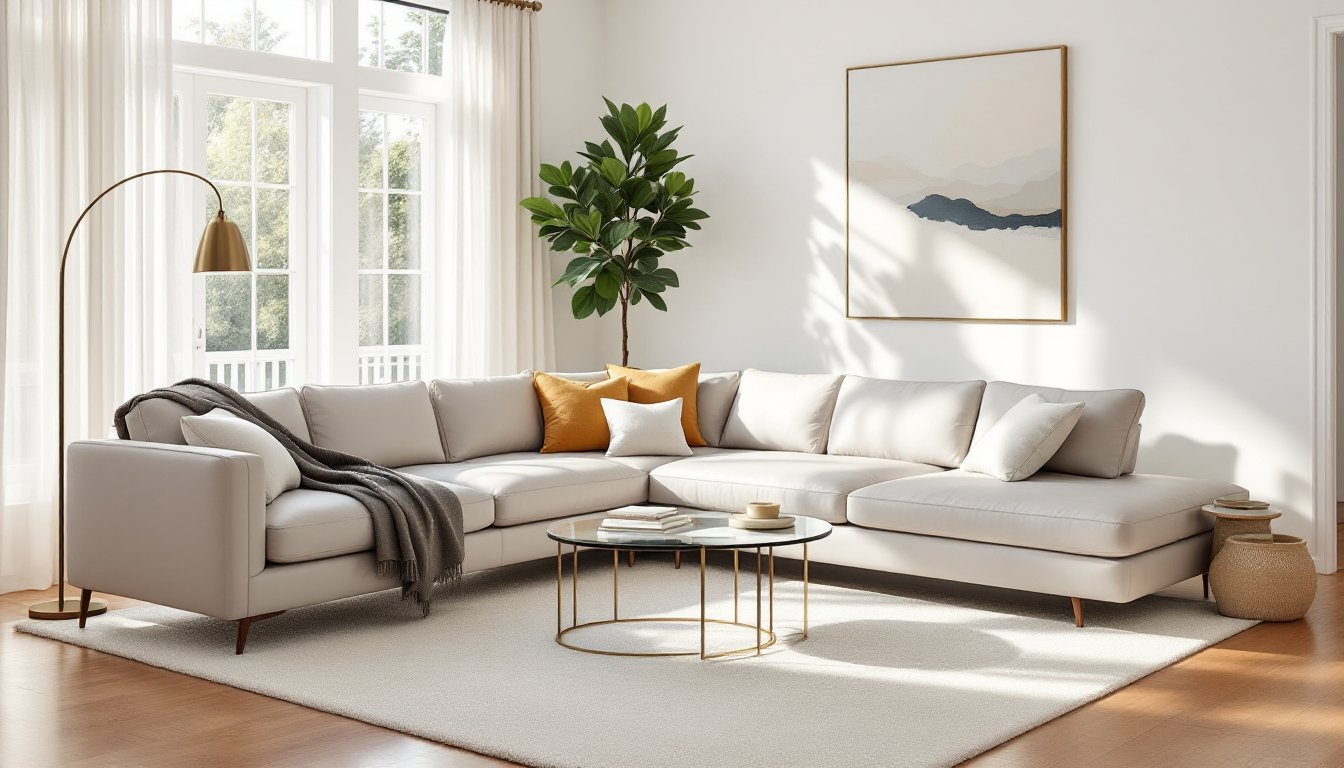
A luxury sectional commands attention, so treat it as the room’s focal point. Rug placement defines the seating area, ideally, front legs of the sectional rest on the rug with 18–24 inches extending beyond on all sides. In smaller spaces, a rug that tucks entirely under the sectional works, but avoid rugs that only catch the front edge, it visually chops the piece.
Accent pillows add color and texture but follow the rule of odd numbers: 3, 5, or 7 pillows in varying sizes (22-inch, 20-inch, and 18-inch squares, or a mix of squares and lumbar pillows). Stick to two or three coordinating colors to avoid a chaotic look. For styling inspiration that balances contemporary and livable aesthetics, many designers reference layouts from modern interior showcases.
Lighting matters. A sectional in a corner benefits from a floor lamp behind the chaise (60–70 inches tall) to eliminate shadows and provide task lighting for reading. Avoid centering a single overhead fixture: instead, use a combination of recessed lights and table lamps on end tables flanking the long side.
Throw blankets look intentional when draped over one arm or the back corner, not bunched in the center. Choose materials that complement the upholstery: a chunky knit for leather, a lightweight linen for velvet. Contrast texture, not just color.
Maintenance and Care Tips to Preserve Your Investment
Luxury sectionals require regular maintenance, not just emergency cleaning. Vacuum weekly using an upholstery attachment to remove dust and grit that abrades fibers. For leather, wipe with a dry microfiber cloth weekly and condition every 6–12 months using a product recommended by the manufacturer, generic conditioners can darken or damage certain finishes.
Fabric sectionals benefit from professional cleaning every 12–18 months, even without visible stains. DIY steam cleaners often over-wet cushions, leading to mold in foam cores. Spot-clean spills immediately: blot (never rub), work from the outside in, and use water-based cleaners unless the fabric is marked “S” (solvent only) on the care tag.
Rotate cushions monthly to equalize wear. If cushions have zippers, flip them end-to-end and top-to-bottom. Down-blend cushions need daily pluffing, karate-chop the center to redistribute fill.
Protect from sunlight: UV exposure fades fabric and dries out leather. If the sectional sits near windows, use UV-filtering window film or cellular shades. Avoid placing sectionals near heating vents or radiators, which dry out materials and loosen joints.
For homes with pets, furniture covers or throws on high-traffic areas (chaise, corner seat) prevent claw snags and oil buildup. Trim pet nails regularly. If you’re investing $10,000+ in a sectional, budget another $200–400 for fabric protection treatment applied by the retailer or a professional, it’s far cheaper than reupholstering a stained piece in three years.