A luxury kitchen faucet isn’t just about turning water on and off, it’s a statement piece that balances precision engineering, lasting materials, and design that elevates the room. While a $50 builder-grade faucet does the job, premium fixtures offer features that can genuinely improve your workflow: touchless sensors, pull-down sprayers with magnetic docking, finishes that resist fingerprints and corrosion, and build quality that lasts decades. If you’re planning a kitchen remodel or want to upgrade a single high-impact element, understanding what separates luxury faucets from standard models will help you choose a fixture that delivers both form and function.
Table of Contents
ToggleKey Takeaways
- Luxury kitchen faucets deliver superior durability through solid brass bodies, ceramic disc valves rated for 500,000+ cycles, and PVD coatings that resist corrosion and fingerprints far better than budget models.
- Premium features like touchless sensors, pull-down sprayers with magnetic docking, and smart temperature controls genuinely improve workflow efficiency when cooking frequently.
- Proper installation planning is essential—measure spout reach, mounting hole configuration, under-sink clearance, and overhead cabinet space before purchasing a high-end faucet to avoid costly retrofitting.
- Regular maintenance with soft cloths, pH-neutral soap, and monthly aerator cleaning with white vinegar extends the lifespan of luxury kitchen faucets and preserves finish quality.
- Choose faucet styles (pull-down, bridge, commercial, or pot filler) based on your sink type, kitchen workflow, and available space to ensure both aesthetic appeal and functional performance.
What Defines a Luxury Kitchen Faucet
Price alone doesn’t make a faucet luxurious. The difference shows up in materials, internal components, and design execution. Premium faucets typically use solid brass bodies rather than zinc or plastic, which resist corrosion and handle higher water pressures without leaking. Internal ceramic disc valves, standard in high-end models, last 500,000+ cycles compared to 100,000 for compression valves in budget faucets.
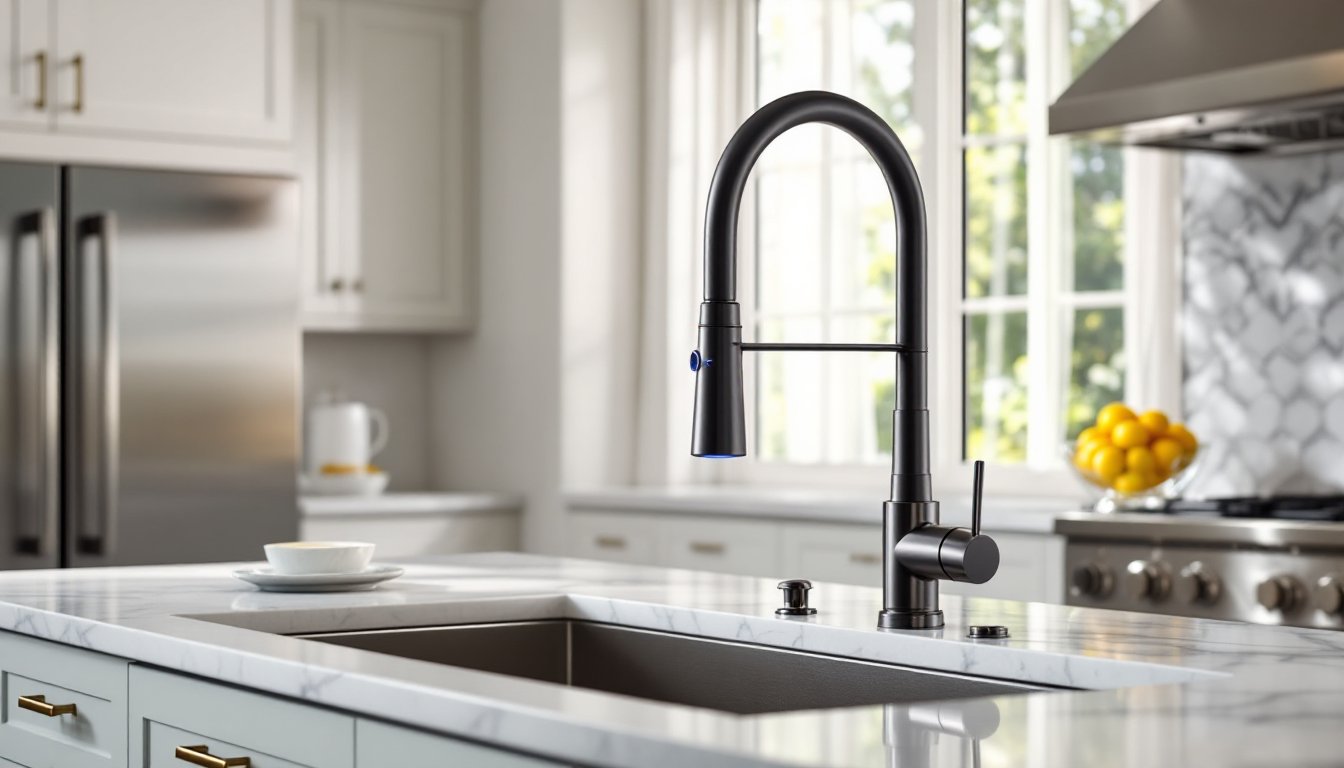
The finish quality is another tell. Luxury faucets use physical vapor deposition (PVD) or similar processes that bond finish coatings at a molecular level, making them scratch- and tarnish-resistant. You won’t see plating wear through to brass after a few years. Brands often offer finishes like matte black, champagne bronze, or polished nickel that go beyond basic chrome.
Design details matter too. Luxury models feature concealed mounting hardware, integrated supply lines, and precision-machined spouts. The articulation on pull-down sprayers feels smooth and deliberate, not loose or clunky. Many incorporate magnetic docking systems (like Delta’s MagnaTite or Kohler’s DockNetik) that snap the spray head back into place with a satisfying click, preventing drooping over time.
Manufacturers also stand behind luxury faucets with lifetime warranties covering finish and function, not just a limited parts warranty. This reflects confidence in the build quality and component durability.
Top Features to Look for in High-End Kitchen Faucets
Touchless Technology and Smart Controls
Touchless activation uses infrared or capacitive sensors to start and stop water flow without touching the handle, a game-changer when your hands are covered in raw chicken or flour. High-end systems allow you to adjust temperature and flow rate manually, then rely on the sensor for on/off control. This keeps the handle clean and reduces cross-contamination.
Some models integrate voice control through platforms like Amazon Alexa or Google Assistant, letting you dispense precise measurements (“Alexa, dispense two cups of water”). Battery-powered sensors typically last 1-2 years on AA batteries, while AC-powered units require an outlet under the sink, plan for this during installation.
Smart controls can include LED temperature indicators that change color (blue for cold, red for hot), programmable presets for coffee brewing or pasta pots, and even water usage tracking through a smartphone app. These features add genuine convenience if you cook frequently, but they do introduce more points of potential failure. Look for models with manual override capabilities in case sensors malfunction.
Premium Finishes and Materials
Beyond PVD coatings, luxury faucets offer finishes that complement high-end appliances and cabinetry. Unlacquered brass develops a natural patina over time, appealing to those who want a living finish. Matte black and brushed gold have surged in popularity, and quality versions resist water spots better than polished chrome.
Some manufacturers, like Brizo’s collaboration with fashion designers, bring haute couture sensibility to kitchen fixtures, offering unique textures and geometric forms you won’t find in standard catalogs.
Spout materials matter for durability. Stainless steel spouts resist staining and maintain their appearance longer than coated zinc. Hose construction should use braided stainless steel with reinforced fittings, check that replacement hoses are available, since these can wear out before the faucet body does.
Handle options range from single-lever designs to bridge faucets with separate hot and cold controls, depending on whether you want modern simplicity or traditional aesthetics. Knurled or cross handles offer better grip when wet, which is a practical detail often overlooked.
Best Luxury Kitchen Faucet Styles for Your Home
Faucet style should match your kitchen’s architecture and your workflow. Pull-down faucets dominate contemporary kitchens, with a tall arching spout and integrated spray head that extends 20-24 inches. These work best with undermount sinks and provide excellent reach for filling large pots or rinsing the entire basin. The arc height (spout clearance) matters, measure your window clearance if the faucet sits below a window.
Bridge faucets mount the spout and handles on a horizontal bar above the deck, creating a vintage or farmhouse look. These pair well with apron-front sinks and traditional cabinetry. Installation requires three mounting holes spaced 8 inches on center, so confirm your sink or countertop can accommodate this before buying.
Pot filler faucets aren’t a replacement for your main faucet but add convenience if you cook with large stockpots frequently. Wall-mounted models install above the range, eliminating the need to carry heavy pots across the kitchen. This requires running a water line through the wall, consider this during a gut remodel rather than as a standalone retrofit.
Commercial-style faucets with exposed coil springs appeal to serious home cooks. These deliver higher flow rates (1.8-2.2 GPM vs. the standard 1.5 GPM) and feature professional-grade spray functions. They’re tall (often 20+ inches above the deck) and visually dominant, so they work best in kitchens with substantial counter space and high ceilings.
For design inspiration that spans multiple styles, resources like Home Bunch showcase how luxury faucets integrate into both traditional and modern kitchens.
Installation Considerations for Premium Faucets
Luxury faucets often require more planning than swapping a standard model. Start by confirming mounting hole configuration. Most sinks have pre-drilled holes: one hole for single-handle faucets, three holes (spaced 4 or 8 inches apart) for widespread or bridge models. If your new faucet doesn’t match, you’ll need a deck plate to cover extra holes or drill new ones, easier with stainless steel sinks than granite or quartz countertops.
Check the spout reach and clearance. Measure from the mounting holes to the center of your sink basin and compare it to the faucet’s specified reach. A spout that’s too short won’t reach the drain: too long and it splashes. Also measure the distance from the deck to the bottom of any overhead cabinets or windows, pull-down faucets need at least 24 inches of clearance when fully extended.
Under-sink space matters more with luxury faucets. Touchless models need room for battery packs or AC transformers. Some high-end faucets include integrated filtration systems or water heating elements that require additional plumbing connections and electrical outlets. Sketch your under-sink layout before committing to a model with multiple components.
Supply line connections are typically 3/8-inch compression fittings, but verify this against your existing shutoff valves. If you’re upgrading from a builder-grade faucet, the old supply lines may not fit the new faucet’s mounting shanks. Premium faucets often include braided stainless steel supply lines, but keep adjustable wrenches and plumber’s tape on hand.
If the faucet includes a separate side sprayer, soap dispenser, or air gap, you’ll need additional holes and clearance. Some integrated systems simplify this, but deck-mounted accessories add complexity.
Safety note: Always shut off water at the supply valves before disconnecting anything. Keep a bucket and towels ready, residual water in lines will spill.
For homeowners tackling this as a DIY project, Remodelista offers detailed visual guides on kitchen fixture installations that show real-world clearances and configurations.
Maintaining Your Luxury Kitchen Faucet
Luxury finishes resist corrosion, but they still need regular care. For PVD and coated finishes, wipe down daily with a soft microfiber cloth and warm water. Avoid abrasive cleaners, ammonia, or bleach-based products, these can break down protective coatings over time. For stubborn spots, use a pH-neutral dish soap diluted in water, then dry immediately to prevent water spots.
Unlacquered brass and living finishes develop patina naturally, which some homeowners love. If you prefer to slow this process, apply a thin coat of carnauba wax every few months and buff gently. Don’t use metal polish on unlacquered brass unless you want to strip the patina and start over.
Internal maintenance focuses on the aerator and spray head. Mineral buildup clogs aerators and reduces flow. Unscrew the aerator (usually hand-tight), soak it in white vinegar for 30 minutes to dissolve calcium deposits, then rinse and reinstall. Do this every 3-6 months depending on your water hardness.
For pull-down or pull-out spray heads, clean the spray face by wiping it with a vinegar-soaked cloth or using the faucet’s self-cleaning feature (if equipped). Some models have silicone nozzles you can rub with your finger to dislodge buildup.
Touchless sensors need occasional recalibration. If the sensor becomes oversensitive or unresponsive, consult the manual, most have a reset procedure involving holding the activation button for 10-15 seconds. Replace batteries annually even if they haven’t died yet: weak batteries cause erratic sensor behavior.
Inspect hoses and connections every 6 months for signs of wear, corrosion, or leaks. Tighten compression fittings if you notice dripping, but don’t over-tighten, brass fittings can crack. If a hose shows cracks or bulging, replace it immediately to prevent under-sink flooding.
Hard water is the biggest enemy of luxury faucets. If your water has high mineral content (over 120 ppm), consider installing a whole-house water softener or at least an under-sink filter. This protects not just the faucet finish but also the internal valve components from scale buildup.
Safety reminder: When working on any faucet, especially models with electronic components, turn off water at the shutoff valves and disconnect power sources (batteries or AC adapters) to avoid shorts or accidental activation.
With proper care, a well-made luxury faucet can outlast your kitchen cabinets. The upfront investment pays off in durability, daily convenience, and the kind of design detail that makes a kitchen feel intentional rather than assembled from a big-box clearance aisle.