
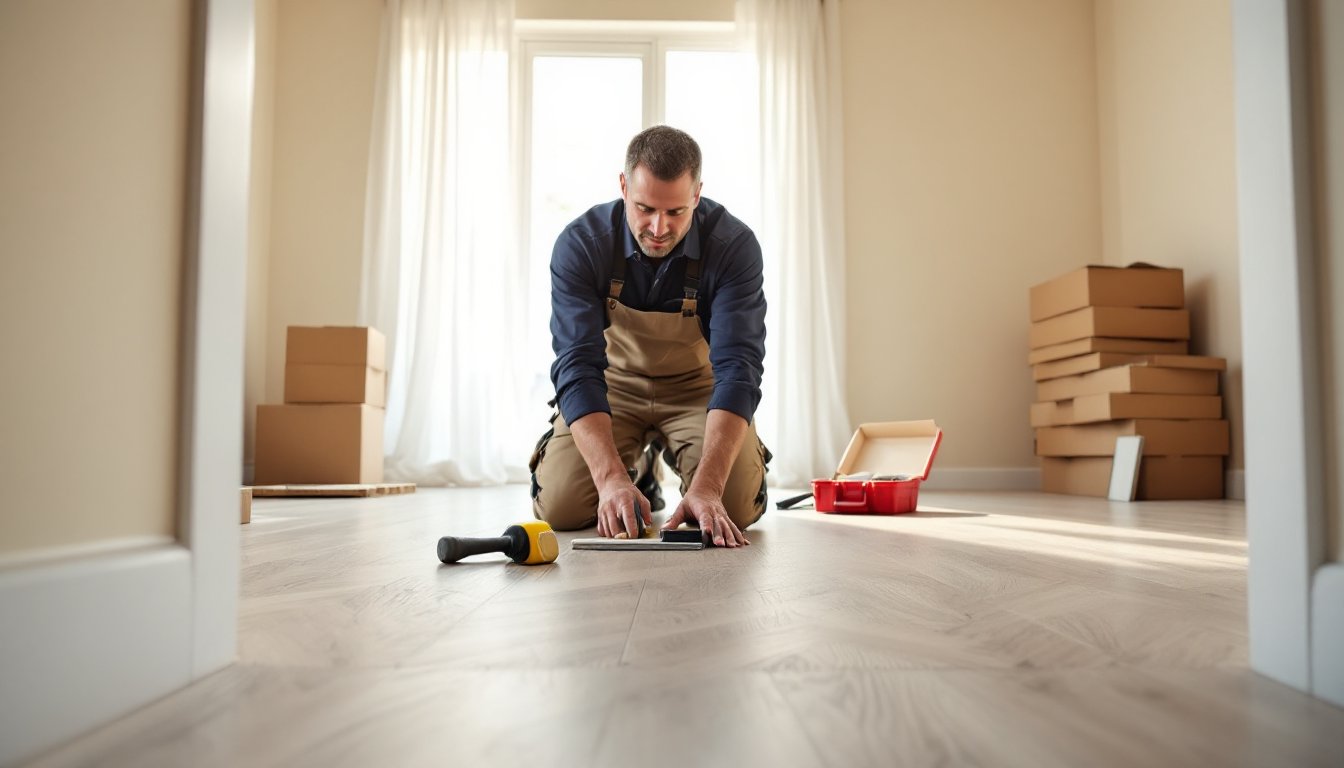
Searching for “vinyl flooring installation near me” means you’re ready to upgrade your floors, but finding the right installer can feel overwhelming. Whether you’re considering luxury vinyl plank flooring installation near me or traditional sheet vinyl, the quality of installation matters just as much as the material itself. A skilled pro will handle substrate prep, proper acclimation, and precise cutting, while a rushed job can lead to buckling, gaps, and warranty headaches. This guide walks through everything homeowners need to know: when to hire a professional, how to vet installers in your area, what fair pricing looks like, and which red flags to avoid.
Table of Contents
ToggleKey Takeaways
- Vinyl flooring installation near me requires professional expertise for subfloor prep, moisture barriers, and complex layouts to avoid buckling, gaps, and warranty issues.
- Click-lock vinyl plank flooring is DIY-friendly for small, level rooms under 200 sq. ft., but larger projects, glue-down methods, and moisture concerns demand a licensed installer.
- Professional vinyl flooring installation costs $3 to $7 per square foot for labor alone, with total projects ranging $6 to $12 per square foot depending on subfloor condition and installation method.
- Verify installers through manufacturer networks, local retailers, online platforms like Angi, and references—always confirm licensing, liability insurance, and workers’ compensation before hiring.
- Red flags include verbal estimates only, upfront payments exceeding 33%, unverifiable references, no subfloor inspection, and bids 30–50% below competitors, which often indicate cut corners or fraud.
Why Vinyl Flooring Is a Smart Choice for Your Home
Vinyl flooring has evolved far beyond the peel-and-stick tiles of the ’80s. Today’s luxury vinyl tile (LVT) and luxury vinyl plank (LVP) products deliver realistic wood and stone looks at a fraction of the cost, with durability that outperforms laminate in moisture-prone areas.
Key advantages:
- Water resistance: Unlike hardwood or laminate, most vinyl products handle spills, humidity, and even minor flooding without swelling or warping. This makes them ideal for kitchens, bathrooms, basements, and laundry rooms.
- Comfort underfoot: Vinyl has a slight give, which feels warmer and softer than tile or concrete. Some products include integrated foam backing for added cushion.
- Low maintenance: A quick sweep and damp mop are usually all it takes. No refinishing, no special cleaners.
- Installation flexibility: Floating floors (click-lock planks) require no glue or nails, while glue-down and loose-lay options suit specific subfloor conditions.
Vinyl also scores high on the Janka hardness scale for manufactured flooring, resisting scratches from pets and furniture better than many laminates. For homeowners who want the look of reclaimed barn wood or Italian marble without the structural load or maintenance, vinyl delivers.
When to Hire a Professional vs. DIY Vinyl Installation
Click-lock vinyl plank flooring is one of the most DIY-friendly materials out there, but that doesn’t mean every project should be tackled solo. Here’s how to decide.
Good DIY candidates:
- Small, square rooms (under 200 sq. ft.) with minimal doorways or transitions
- Floating floors with click-lock planks over level, clean subfloors
- No subfloor issues: no moisture problems, no major dips or humps, no asbestos tile underneath
- Basic cuts only: mostly straight runs with a few notches around door jambs
You’ll need a utility knife or vinyl cutter, a pull bar, tapping block, spacers, and a straight edge. Budget a full weekend for a 12×12 room if you’re new to the process.
Hire a pro if:
- Subfloor prep is required: leveling compound, plywood overlay, moisture barrier installation, or removal of old flooring (especially sheet vinyl or adhesive-backed tile)
- Large or complex layouts: multiple rooms, diagonal patterns, herringbone, or intricate tile designs
- Glue-down or loose-lay installation: these methods demand experience with adhesive spreaders, trowel notch sizes, and proper cure times
- Moisture or structural concerns: basements with groundwater issues, crawlspace access, or floors over unvented spaces may need vapor barriers or specialty underlayment
- You lack the tools or time: a pro brings a table saw or miter saw for cleaner cuts, a floor roller for glue-down, and often completes in one day what might take a DIYer a week
Most manufacturers’ warranties require professional installation for commercial-grade products or full-home coverage. Read the fine print before you commit.
How to Find Qualified Vinyl Flooring Installers in Your Area
Local referrals beat national chains for personalized service, but vetting is essential. Start with these sources:
1. Online platforms
Services like Angi and HomeAdvisor aggregate reviews, license info, and project portfolios. Filter by specialty (luxury vinyl plank flooring installation near me, for example) and read recent reviews, not just star counts.
2. Manufacturer installer networks
Brands like Shaw, Mohawk, and Armstrong maintain lists of certified installers who’ve completed product-specific training. Certification means they know the quirks of that brand’s click-lock system, recommended adhesives, and warranty requirements.
3. Local flooring retailers
Independent shops often employ or contract with installers who work exclusively in your region. They’re familiar with local subfloor conditions (concrete slab vs. pier-and-beam) and building codes.
4. Word of mouth
Ask neighbors, your realtor, or your general contractor. A name that comes up twice from trusted sources is worth a call.
Red tape to check:
- License: Many states require a contractor’s license for flooring work over a certain dollar amount. Verify via your state’s licensing board website.
- Insurance: Request proof of general liability and workers’ comp. If an installer is injured on your property and lacks coverage, you could be liable.
- References: Ask for three recent jobs similar in scope to yours. Drive by if possible, or request photos of finished transitions and tricky cuts.
What to Expect: Average Costs and Pricing Factors
As of early 2026, expect to pay $3 to $7 per square foot for professional vinyl plank or tile installation, labor only. Total project cost (materials + labor) typically runs $6 to $12 per square foot, depending on product grade and site conditions.
Labor cost drivers:
- Subfloor condition: If the installer needs to pour self-leveling compound ($1–$2/sq. ft. extra), remove old flooring, or install a moisture barrier, add $1–$3/sq. ft.
- Room shape and size: Small bathrooms with lots of cuts cost more per square foot than open-plan living areas. Expect a minimum charge ($300–$500) for jobs under 100 sq. ft.
- Installation method: Glue-down jobs cost more than click-lock floating floors due to adhesive, trowels, and longer labor time.
- Transitions and thresholds: Custom metal or wood transitions between rooms, stair nosing, or quarter-round trim add $3–$8 per linear foot.
- Furniture moving: Some installers include basic furniture relocation: others charge $50–$150 per room.
Material costs:
- Budget vinyl: $1–$2/sq. ft. (basic residential, thin wear layer)
- Mid-range LVP/LVT: $2.50–$4/sq. ft. (12–20 mil wear layer, realistic embossing)
- Premium luxury vinyl: $4–$7/sq. ft. (rigid core, attached underlayment, 30+ year warranty)
Always get at least three written estimates. Platforms like ImproveNet offer cost calculators to ballpark your project before you reach out. Prices vary by region, urban metro areas run 20–40% higher than rural markets.
Questions to Ask Before Hiring an Installer
A solid installer won’t dodge tough questions. Use this checklist during your initial consultation:
Licensing and insurance
- Are you licensed and bonded in this state?
- Can I see proof of liability and workers’ comp insurance?
Experience and specialization
- How many vinyl flooring jobs have you completed in the past year?
- Do you have experience with this specific product line (click-lock, glue-down, rigid core)?
- Can you provide references for similar projects?
Scope and timeline
- What’s included in your quote? (subfloor prep, underlayment, trim removal/reinstall, haul-away)
- How long will the job take, start to finish?
- Do you handle furniture moving, or do I need to clear the rooms?
- What’s your policy if the material arrives damaged or short?
Subfloor and prep
- Will you inspect the subfloor for moisture, levelness, and structural integrity?
- If leveling or repairs are needed, is that included or a separate line item?
- What underlayment do you recommend, and why?
Warranty and follow-up
- Do you offer a workmanship warranty? (Look for at least one year.)
- How do you handle callbacks if planks lift or seams open?
- Will you provide care and maintenance guidelines at completion?
Payment terms
- What’s your deposit policy? (Never pay more than 25–33% upfront.)
- Do you accept credit cards, checks, or payment apps?
- When is final payment due? (Ideally, after a final walkthrough.)
If an installer hesitates or deflects on any of these, move on.
Red Flags to Watch Out for When Choosing a Contractor
Even in a hot market, don’t let urgency override due diligence. These warning signs suggest trouble:
1. No written estimate or contract
Verbal agreements are worthless if disputes arise. A legitimate contractor provides a detailed, signed contract with scope, materials, timeline, payment schedule, and warranty terms.
2. Requests full payment upfront
Standard practice is a deposit (25–33%), a mid-job payment once subfloor prep is done, and final payment on completion. Anyone demanding 50% or more before starting may vanish with your cash.
3. Unverifiable references or online presence
No website, no reviews, no portfolio photos? Proceed with caution. Scammers often use disposable phone numbers and email addresses.
4. Pressure tactics or “today only” pricing
Legitimate installers don’t need high-pressure sales. If someone insists you sign immediately to lock in a discount, it’s often a sign of desperation or deception.
5. No proof of insurance
If they can’t produce a current certificate of insurance, they’re either uninsured or underinsured. Either scenario leaves you exposed.
6. Skips the subfloor inspection
A pro always checks moisture levels (especially over concrete slabs), levelness with a 4-foot or 6-foot level, and structural soundness. Anyone who eyeballs it and says “looks fine” is cutting corners.
7. Quotes significantly below competitors
If one bid is 30–50% lower than others, ask why. They may be using inferior materials, skipping prep steps, or lack proper insurance. Cheap now often means expensive repairs later.
Trust your gut. If something feels off during the estimate, don’t rationalize it away. There are plenty of skilled, honest installers, find one who checks all the boxes.
Conclusion
Finding the right vinyl flooring installer comes down to assignments, clear communication, and knowing what quality work looks like. Vet credentials, compare detailed estimates, and don’t skip the reference calls. A solid installation pays dividends for years, while a rushed job can void warranties and cost more to fix than it would’ve cost to do right the first time. Take your time, ask the tough questions, and you’ll end up with floors that look great and last.