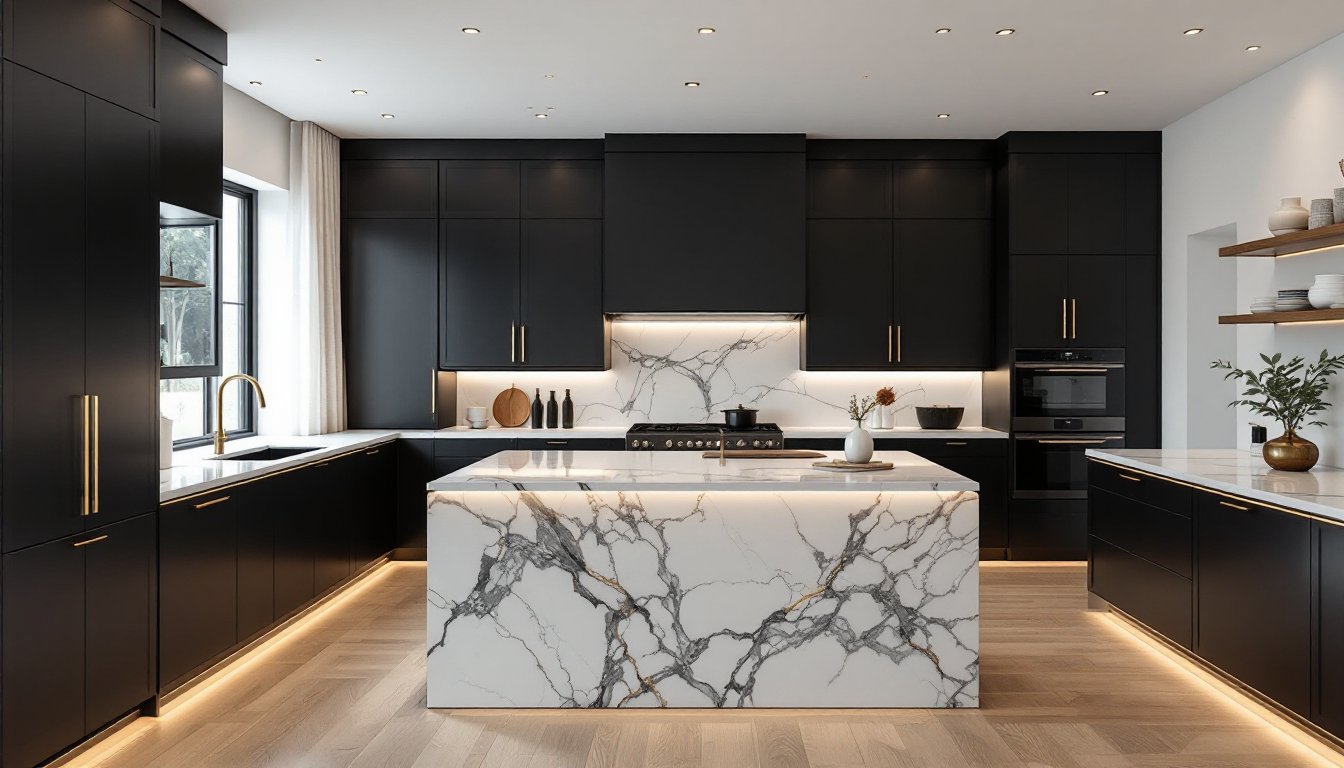
Black kitchens have shifted from industrial curiosity to full-blown luxury trend. In 2026, they’re the defining aesthetic for homeowners who want drama, sophistication, and a timeless edge that white cabinetry can’t deliver. But pulling off a modern luxury black kitchen isn’t as simple as slapping matte paint on every surface, it demands thoughtful material selection, strategic lighting, and careful balance to avoid a cave-like feel. Whether someone’s planning a full remodel or a cabinet refinish, understanding how black interacts with texture, light, and contrast makes the difference between runway-ready and funeral parlor.
Table of Contents
ToggleKey Takeaways
- A modern luxury black kitchen combines premium finishes, layered lighting, and strategic contrast to achieve sophistication without appearing dark or oppressive.
- Choose matte or satin black cabinetry finishes over high-gloss to hide fingerprints and dust while maintaining an upscale aesthetic, and pair with quality frame construction like solid hardwood or dovetail joinery.
- Light countertops in white marble, quartzite, or quartz provide essential contrast to black cabinetry and should be complemented by metallic hardware in brass, gold, or brushed bronze for warmth and dimension.
- Implement layered lighting with recessed LED downlights (40–50 lumens per square foot), under-cabinet LED strips, and statement pendants to prevent the black kitchen from feeling cave-like or heavy.
- Break up all-black cabinetry with light-colored walls, natural wood accents on islands or flooring, and varied textures to maintain visual interest and prevent a monolithic appearance.
- Invest in premium appliances and hardware—panel-ready refrigerators, professional-range models, and substantial pulls—to ensure your black kitchen investment remains cohesive and timeless for years to come.
Why Black Kitchens Are the Ultimate Modern Luxury Statement
Black conveys permanence in a way lighter palettes struggle to match. It doesn’t show wear as readily as white, hides scuffs better than gray, and anchors a room with visual weight that feels intentional rather than safe. High-end designers gravitate toward black because it photographs sharply and amplifies other materials, marble veining pops, brass hardware glows, and natural wood grains stand out.
The modern luxury angle hinges on finish quality and layering. Cheap black cabinets read flat and hollow. Premium options use lacquered finishes, hand-rubbed oils, or textured veneers that catch light differently across the day. The resurgence of dark cabinets in kitchen design underscores how texture and craftsmanship elevate the look beyond simple color choice.
Black also offers flexibility across design styles. It works in minimalist Scandinavian spaces with pale oak accents, industrial lofts with exposed steel beams, and maximalist interiors layered with gold fixtures and patterned tile. That adaptability is rare, white kitchens lean heavily into farmhouse or coastal themes, but black stays neutral enough to shift with changing tastes.
One caveat: dust, fingerprints, and water spots show up fast on black surfaces, especially glossy finishes. Homeowners should be ready for frequent wiping, or opt for matte and textured finishes that hide smudges better. It’s a maintenance trade-off, not a deal-breaker.
Essential Design Elements for a Luxury Black Kitchen
Cabinetry and Finishes That Define Black Kitchen Elegance
Slab-front cabinetry dominates modern luxury black kitchens. Clean, handle-free doors with integrated push-to-open mechanisms eliminate visual clutter and let the material speak. For a softer take, shaker-style doors in black create depth without fussiness, especially when paired with subtly contrasting hardware.
Finish choice matters more than paint color. Matte black hides fingerprints and reads sophisticated without glare. Satin finishes split the difference, offering slight sheen that’s easier to clean than matte but less reflective than gloss. High-gloss lacquer works in contemporary spaces with abundant natural light, bouncing illumination around the room, but it demands daily maintenance.
For upper cabinets, consider open shelving or glass-front inserts to break up solid black expanses. Displaying high-quality dishware, glassware, or curated accessories adds personality and prevents the space from feeling too monolithic. If going floor-to-ceiling with closed cabinetry, vary the finish, combine matte lowers with a textured backsplash or integrate a wood tone island to create visual relief.
Frame construction should be solid hardwood or high-grade plywood with dovetail joinery if budget allows. Black shows every imperfection, so cabinet boxes need to be square and doors perfectly aligned. Soft-close hinges and drawer glides are non-negotiable in the luxury category, slamming drawers undercut the premium feel instantly.
Countertops and Backsplashes That Complement Black Cabinetry
Countertops provide the primary contrast opportunity. White or light-veined marble (Calacatta, Statuario) is the classic pairing, offering luminous contrast and timeless elegance. Expect $75–$150 per square foot installed, depending on slab rarity and regional availability. Marble requires sealing and stains easily, so homeowners who cook heavily might prefer quartzite, which mimics marble’s look with better durability.
Quartz (Caesarstone, Silestone) in whites, creams, or soft grays delivers the contrast without the maintenance anxiety. It’s non-porous, doesn’t need sealing, and resists heat and scratches better than natural stone. Cost runs $60–$120 per square foot installed.
For a warmer approach, butcher block or live-edge wood countertops add organic texture that softens black’s severity. They need regular oiling and aren’t ideal near sinks or cooktops unless sealed properly, but they photograph beautifully and age with character.
Backsplashes can either blend quietly or make a statement. Large-format porcelain slabs in white or cream keep things minimal. Subway tile in glossy white is timeless but leans traditional, consider 3×12-inch or 4×16-inch formats for a more contemporary scale. Metallic tiles (brushed brass, copper, or stainless) introduce warmth and reflectivity. For maximum drama, a book-matched marble slab backsplash that continues the countertop creates seamless luxury, though it’s a significant cost jump.
Grout color on tile backsplashes matters. White grout offers crisp contrast but shows staining. Gray or charcoal grout blends with black cabinetry and hides dirt better, use epoxy grout for stain resistance and longevity.
Lighting Strategies to Make Your Black Kitchen Shine
Black absorbs light, so a luxury black kitchen demands layered lighting at higher output than a white kitchen of the same size. Skimp on lighting, and the space feels oppressive.
Recessed LED downlights should be the foundation, space them 24–30 inches apart in a grid pattern across the ceiling. Use 3000K color temperature (warm white) to keep the space inviting, not clinical. Aim for 40–50 lumens per square foot in a black kitchen, compared to 30–40 lumens in lighter spaces.
Under-cabinet lighting is non-negotiable. LED strip lights or puck lights mounted beneath upper cabinets illuminate countertops and reduce shadows. This is both functional for prep work and aesthetic, creating a floating effect that visually separates cabinetry from walls. Install on a dimmer so it can serve as task lighting during cooking or ambient lighting during entertaining.
Pendant lights over an island or peninsula introduce focal points and vertical interest. Brass, copper, or gold-toned metal fixtures add warmth against black. Glass globes or sculptural designs prevent the space from feeling too heavy. Hang pendants 30–36 inches above the countertop for proper clearance and light distribution.
For added luxury, consider toe-kick lighting (LED strips installed at the base of cabinets) or in-cabinet lighting with glass-front uppers. Both subtle touches amplify the custom, high-end feel.
Natural light is the best supplement. If possible, maximize window size or add a skylight to flood the space with daylight. Dress windows with minimal treatments, sheer linen or no curtains at all, to avoid blocking light. Reflective surfaces like polished countertops and glossy backsplashes help bounce available light around the room.
Balancing Black with Contrasting Colors and Textures
An all-black kitchen can work, but it takes discipline and excellent lighting. Most luxury black kitchens succeed by introducing strategic contrast.
White or cream walls are the easiest balancing move. They frame black cabinetry without competing and reflect light back into the space. Warm grays or soft greiges offer a middle ground that feels cozier than stark white.
Natural wood tones, whether in flooring, open shelving, or a kitchen island base, provide organic warmth. Light oak, walnut, or reclaimed wood all pair well with black. If cabinets are black, consider a wood-toned island to break up the mass. Conversely, an all-black island can anchor a kitchen with lighter perimeter cabinetry.
Metallic accents are essential. Brass, brushed gold, and unlacquered bronze introduce warmth and luxury. Matte black hardware can disappear into cabinetry, which is fine for a seamless look, but mixed-metal details, gold faucets, copper pendant lights, stainless appliances, add dimension. Avoid chrome or polished nickel, which can read cold against black.
Texture layering prevents flatness. Combine matte black cabinets with a glossy tile backsplash, rough stone countertops with smooth cabinet fronts, or matte paint with textured wallpaper on an accent wall. Sleek modern black kitchen designs often incorporate varied finishes to maintain visual interest.
Flooring should contrast enough to define the space. Wide-plank light oak, pale terrazzo, or large-format gray tile all work. Dark floors (espresso hardwood, black slate) can look cohesive but require strong overhead and natural lighting to avoid a cave effect.
High-End Appliances and Fixtures for a Luxury Black Kitchen
Appliance finish is a major decision. Stainless steel is the safe, resale-friendly option and adds brightness. Black stainless (available from Samsung, LG, and others) offers a monochromatic look with better fingerprint resistance than standard stainless.
Panel-ready appliances (Sub-Zero, Thermador, Bosch Benchmark series) let refrigerators and dishwashers hide behind custom cabinetry panels, creating a seamless, built-in look that screams luxury. These cost more, $3,000–$10,000+ per appliance, but eliminate visual clutter.
For ranges, dual-fuel professional-style models (gas cooktop, electric oven) from Bertazzoni, Wolf, or BlueStar come in matte black or can be customized. Expect $4,000–$8,000 for a 36-inch model. Pair with a statement range hood, either a dramatic black steel chimney hood or a custom wood or plaster hood that contrasts with cabinetry.
Faucets and sinks should lean into quality and finish consistency. A matte black or brushed gold faucet pairs beautifully with black cabinetry. Brands like Kohler, Brizo, and Rohl offer finishes that won’t wear off with use. For sinks, undermount stainless steel is practical and hides seams, but a black composite sink (Blanco Silgranit, Kraus) creates a monochromatic, seamless look. White fireclay farmhouse sinks offer classic contrast if the overall palette leans traditional.
Hardware, pulls, knobs, and handles, should be substantial and well-made. Thin, lightweight hardware looks cheap against dark cabinetry. Opt for solid brass or stainless construction in brushed, antique, or unlacquered finishes. Length matters: 6-inch to 12-inch pulls on drawers and doors feel proportional to large slab fronts.
For those researching broader kitchen design ideas and appliance reviews, evaluating finish durability and long-term aesthetics is key, luxury kitchens should look cohesive for a decade, not just at install.