A luxury modern white kitchen isn’t about sterile emptiness or cold minimalism, it’s about precision, quality materials, and architectural clarity. White acts as a foundation that amplifies light, showcases craftsmanship, and lets every detail, from cabinet joinery to hardware finish, stand out. Done right, a white kitchen feels expansive and timeless. Done poorly, it looks flat and builder-grade. This guide walks through the design elements, material choices, and layout strategies that separate a high-end white kitchen from a basic one.
Table of Contents
ToggleKey Takeaways
- A luxury modern white kitchen succeeds through precision, quality materials, and architectural clarity—white surfaces reveal craftsmanship, making flawless execution non-negotiable.
- White kitchens remain timeless in luxury design because they reflect natural light, create visual expansion, pair flexibly with any accent color, and appeal to the broadest buyer pool.
- Premium finishes like high-gloss lacquer cabinets, rectified porcelain tiles, and durable countertop materials (quartz, marble, or porcelain slabs) define the gap between high-end and builder-grade white kitchens.
- Layering texture, tone, and shadow through matte/glossy contrasts, 3D backsplashes, wood elements, and strategic dark accents prevents an all-white space from feeling flat or sterile.
- Smart layout with proper work triangles, generously sized islands (42–48″ clearance), hidden storage systems, and integrated appliances balance aesthetic refinement with everyday functionality in a modern luxury white kitchen.
- Sculptural lighting, minimalist hardware, and thoughtful details like recessed toe kicks and shadow gaps separate custom luxury execution from standard cabinetry.
Why White Kitchens Remain the Pinnacle of Luxury Design
White has staying power in high-end kitchens because it’s a design workhorse, not a trend. It reflects natural light better than any other color, making even compact kitchens feel larger and airier. In luxury applications, white surfaces reveal the quality of materials, poor joinery, cheap finishes, and uneven paint stand out immediately, so only well-executed work holds up.
White also offers flexibility. It pairs with warm wood tones, cool metals, stone in any finish, and bold accent colors without clashing. This neutrality means homeowners can update hardware, lighting, or accessories over the years without a full remodel. In resale terms, white kitchens appeal to the widest buyer pool, which matters when you’re investing in premium materials.
From a practical standpoint, white surfaces show dust and wear, so luxury white kitchens require durable, cleanable finishes, lacquered cabinetry, sealed stone, and high-quality paint. It’s a color that demands quality, which is exactly why it signals luxury. Builders and designers know that a flawless white finish costs more in labor and materials than darker, forgiving tones.
Essential Design Elements for a Modern Luxury White Kitchen
Premium Materials and Finishes
Cabinets set the tone. Frameless (European-style) cabinets with flush inset doors or slab fronts deliver the clean, seamless look modern luxury kitchens require. Full-overlay doors with minimal reveals work too. Avoid raised-panel or ornate detailing, they read traditional, not modern.
For cabinet finish, high-gloss lacquer or matte polyurethane over hardwood or MDF cores both work, but lacquer offers the smoothest, most reflective surface. Expect 8–12 coats with sanding between layers for a mirror finish. If you’re painting on-site, use a high-quality acrylic enamel like Benjamin Moore Advance or Sherwin-Williams Emerald Urethane with a fine-finish roller or HVLP sprayer for a factory-like result. Skip brushes, they leave texture.
Countertops anchor the material palette. Quartz (Caesarstone, Silestone) offers consistent white with low maintenance and no sealing. Marble, Calacatta, Statuario, brings natural veining and high-end appeal but requires sealing every 6–12 months and will patina over time. Some homeowners want that living finish: others don’t. Porcelain slabs (Dekton, Neolith) mimic marble or concrete but resist staining and etching better than natural stone. Thickness matters: 3cm (1 ¼”) slabs feel more substantial than 2cm.
Backsplashes can match countertops for a monolithic look or contrast with texture. Large-format porcelain tiles, subway tile with minimal grout lines, or full-height slab backsplashes all work in modern white kitchen spaces. If using tile, specify rectified edges (precision-cut) and tight grout lines (⅛” or 1/16″) with a high-quality, stain-resistant grout like Mapei Ultracolor Plus FA. White or light gray grout keeps the monochrome look.
Statement Lighting and Hardware
Lighting in a luxury white kitchen needs to be both functional and sculptural. Recessed LED cans (4″ or 6″) with a high CRI (90+) and 3000K–3500K color temperature provide even ambient light without yellow or blue casts. Space them 4–6 feet apart and keep them on dimmers.
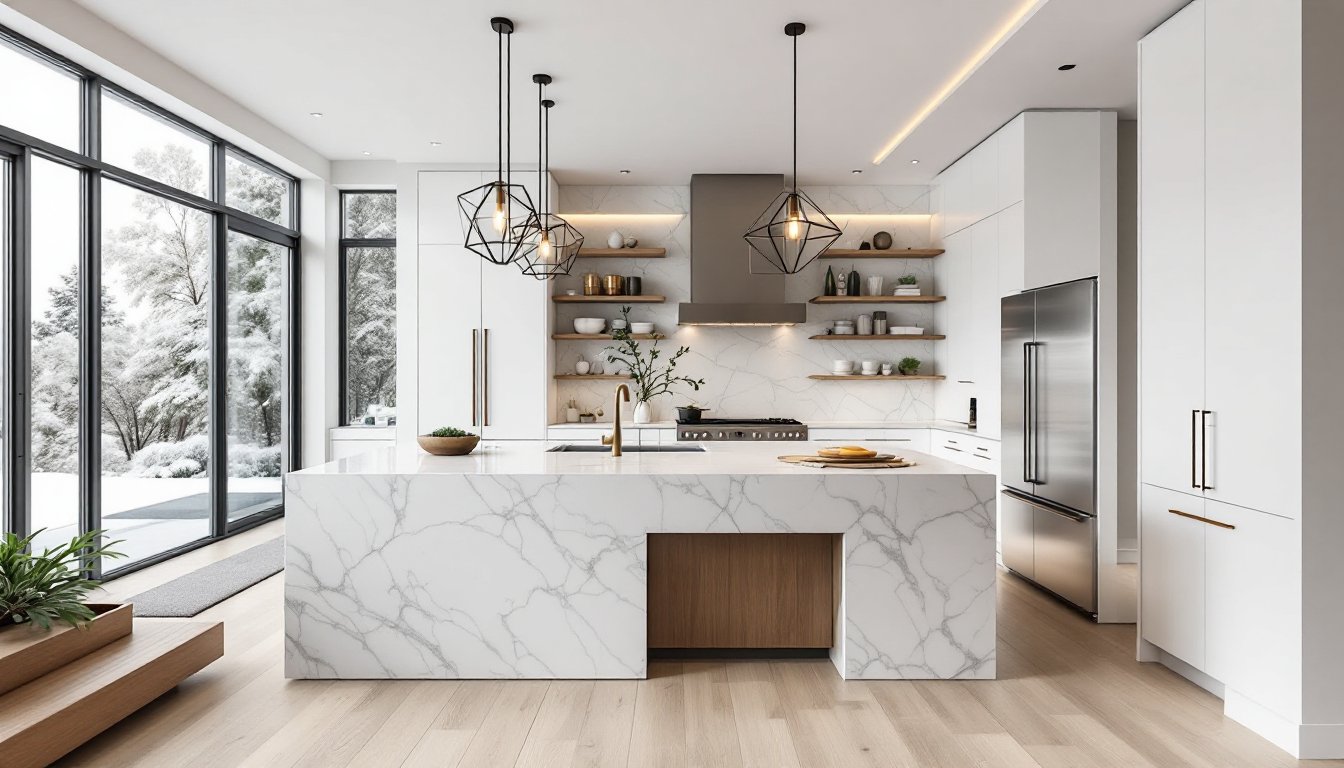
Add pendant lights over islands or peninsulas, this is where you can introduce material contrast. Oversized glass globes, matte black metal shades, or geometric fixtures in brass or brushed nickel add visual weight. Hang pendants 30–36″ above the counter for task lighting without blocking sightlines. For a dramatic effect, use linear suspension fixtures or a series of smaller pendants at staggered heights.
Under-cabinet lighting is non-negotiable in a luxury kitchen. LED tape lights or puck lights mounted to the underside of wall cabinets eliminate shadows on countertops. Opt for fixtures that are dimmable and linkable for a seamless look. Many designers now prefer recessed LED channels that sit flush with the cabinet bottom for a concealed light source.
Hardware might seem like a small detail, but in a white kitchen, it’s one of the few elements that breaks up the monochrome plane. Brushed brass, polished nickel, matte black, or stainless steel all work depending on the desired warmth or coolness. For a modern look, go minimal: simple bar pulls (5–12″ long depending on door size) or edge pulls that recess into the cabinet door. If you want a handleless look, use push-to-open mechanisms, but be aware these show fingerprints more than hardware.
Faucets and sinks should match the hardware finish. Undermount sinks keep countertops clean-lined: integrated sinks (same material as the counter) are even more seamless but limit bowl depth. Single-lever faucets with pull-down sprayers offer function: bridge-style or wall-mount faucets add architectural interest.
Creating Depth and Dimension in an All-White Space
An all-white kitchen can feel flat without intentional layering of texture, tone, and shadow. Start by varying white tones slightly, cabinets in a warm white (with cream or beige undertones) and walls in a cooler bright white create subtle contrast without breaking the monochrome palette. Test paint samples on large boards in natural and artificial light before committing.
Texture is critical. Matte cabinets, glossy backsplashes, honed stone counters, and brushed metal hardware all reflect light differently, creating visual interest. Consider a textured backsplash, 3D tiles, stacked stone, or ribbed porcelain panels, to add shadow lines and depth. Wood elements, even if painted or bleached, introduce grain patterns that catch light.
Open shelving or glass-front cabinets break up solid runs of cabinetry and add depth by revealing layers. Use open shelves sparingly, one wall or a section flanking a range or sink. Stock them with dishware, glassware, or objects in neutral tones to maintain the clean look. Floating shelves in the same white as the walls create a shadow gap that adds dimension.
Incorporate contrasting elements strategically. A single wall of dark cabinetry, a black range hood, or a wood-tone island base grounds the space and prevents it from feeling too ethereal. Natural wood flooring, white oak with a clear or light stain, or wide-plank European oak, adds warmth underfoot without competing with the white palette. If you want white floors, use large-format porcelain tile or wide engineered oak planks with a matte white stain.
Don’t ignore shadow and recess. Recessed toe kicks, handleless cabinets with shadow gaps, and floating vanities or islands create horizontal and vertical lines that add depth. These details require precise carpentry, cabinets need to be level and plumb, and reveals must be consistent, but they’re what separate custom-looking work from off-the-shelf.
Smart Layout and Functionality Upgrades for Luxury White Kitchens
Luxury isn’t just about looks, it’s about how the kitchen works. Start with the work triangle (sink, range, refrigerator), keeping the total perimeter between 12 and 26 feet for efficiency. In modern layouts, this often becomes a work zone approach with distinct areas for prep, cooking, and cleanup.
Islands are central to most luxury kitchens. Size yours proportionally: leave at least 42–48″ of clearance on all sides for traffic flow: 48″ is better if multiple cooks use the space. For seating, allow 24″ of width per person and 15″ of knee space under the counter overhang. A 12–15″ overhang supports stools without requiring additional support: anything deeper needs corbels or steel brackets.
Storage in a luxury kitchen is abundant but hidden. Full-extension soft-close drawer glides, pull-out shelves in base cabinets, and vertical tray dividers make every inch usable. Include at least one appliance garage or countertop lift for small appliances, keeping blenders and toasters off the counter maintains the clean look.
Integrated appliances are a hallmark of modern luxury. Panel-ready refrigerators, dishwashers, and even range hoods blend into cabinetry for a seamless appearance. Brands like Sub-Zero, Miele, and Bosch offer panel-ready options: just be sure your cabinetmaker specs doors to match the appliance dimensions and hinge requirements.
For cooktops, induction is the modern choice, faster, more precise, and easier to clean than gas or electric coil. If you prefer gas, consider a flush-mounted or integrated cooktop rather than a bulky range. Many high-end designs now favor separate cooktops and wall ovens over all-in-one ranges, which allows for more flexible layout and cleaner sightlines.
Ventilation often gets overlooked but is essential, especially in open-plan homes. Range hoods should move at least 300–600 CFM depending on cooktop BTU output: more for high-output gas ranges. Ductless hoods with recirculating filters are quieter but less effective. If you want a statement hood, consider a custom plaster or drywall hood painted to match the walls, or a sleek stainless or matte black metal hood as a focal point.
Finally, consider smart upgrades that enhance daily use: touchless faucets, under-cabinet outlets with USB ports, LED drawer lighting, and integrated charging stations. These don’t scream luxury, but they make the kitchen more pleasant to use, which is the ultimate measure of quality design. Kitchens are workspaces, and even well-planned white spaces benefit from thoughtful details that reduce friction in everyday tasks.
Conclusion
A luxury modern white kitchen is an exercise in restraint, precision, and quality. It’s not about filling space with features, it’s about choosing the right materials, ensuring flawless execution, and designing for both beauty and function. The result is a kitchen that feels calm, bright, and enduring.