A bedroom ceiling fan isn’t just about pushing air around, it’s furniture suspended overhead, visible every morning when you open your eyes. The right one blends into high-end design while quietly doing the work of climate control and energy savings. Luxury ceiling fans separate themselves through motor quality, blade engineering, finish options, and integrated lighting that doesn’t scream “big-box hardware store.” If you’re upgrading a primary bedroom or designing a new build with attention to detail, understanding what elevates a fan from functional to exceptional makes all the difference in both comfort and resale value.
Table of Contents
ToggleKey Takeaways
- Luxury ceiling fans for bedrooms distinguish themselves through DC motor technology, die-cast housings, and premium finishes that deliver up to 70% energy savings compared to standard AC motors while operating at whisper-quiet levels.
- Blade engineering with aerodynamic profiling and curved ABS composite or solid wood blades optimizes airflow (4,000-6,000 CFM) at lower RPMs, reducing noise while maintaining climate control efficiency.
- Premium luxury ceiling fans feature integrated dimmable LED arrays with color rendering index above 90, Wi-Fi connectivity for smart home integration, and lifetime or 15+ year warranties that signal manufacturer confidence.
- Design styles for high-end bedroom fans range from modern minimalist three-to-four blade models with flush mounts to traditional options with five-to-six wood blades and decorative finishes that complement existing bedroom architecture.
- Proper installation requires a fan-rated ceiling box with 50+ pounds dynamic load capacity, 7-9 feet clearance from floor to blade tips, and balanced blade positioning to eliminate wobble and ensure peak performance.
What Makes a Ceiling Fan Luxury?
Luxury ceiling fans distinguish themselves through DC motor technology, which runs quieter and more efficiently than standard AC motors, often using 70% less energy while delivering variable speed control down to a whisper. You’ll find die-cast zinc or solid wood housings instead of stamped steel, hand-applied finishes like brushed brass or oil-rubbed bronze, and sealed ball bearings rated for decades rather than years.
Blade engineering matters more than most homeowners realize. High-end models use curved ABS composite blades or solid wood with aerodynamic profiling that moves more air at lower RPMs, reducing noise while maintaining CFM (cubic feet per minute) output. Expect 52-inch to 60-inch blade spans for bedrooms over 225 square feet, with pitch angles between 12 and 15 degrees for optimal airflow without turbulence.
Integrated LED arrays replace the Edison-socket-and-glass-bowl approach. Look for dimmable, temperature-adjustable LEDs (2700K-5000K) with a CRI (color rendering index) above 90 so colors look accurate. Remote controls in this category often include RF (radio frequency) rather than IR, eliminating line-of-sight issues, and many now offer Wi-Fi or Zigbee integration with voice control and scheduling through home automation platforms.
Warranties signal confidence: luxury manufacturers back motors with lifetime or 15+ year warranties, compared to the 1-3 year coverage on entry-level units. You’re paying for longevity, refinement, and the elimination of wobble or hum that plagues cheaper fans after a year of use.
Top Design Styles for Luxury Bedroom Ceiling Fans
Choosing a style that complements existing architecture and furnishings prevents the fan from becoming a visual afterthought. The bedroom’s design language should guide the selection, from blade count to finish materials.
Modern and Minimalist Fans
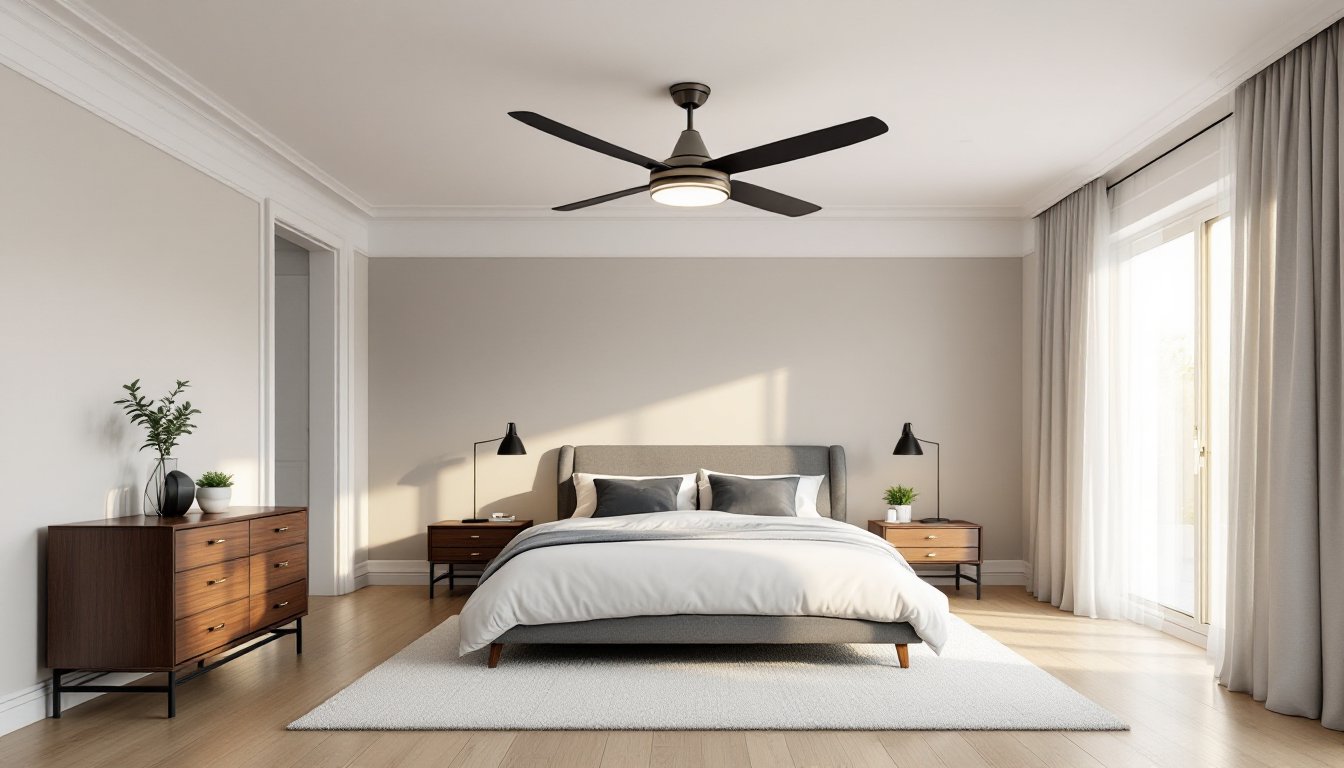
Modern fans strip away ornamentation. Think three to four blades in matte black, brushed nickel, or even transparent acrylic, paired with low-profile or flush-mount housings that sit within 10-12 inches of the ceiling. Blade designs often feature clean geometric lines or airfoil shapes inspired by aviation, and some models hide the motor entirely within a cylindrical housing for a sculptural effect.
Integrated lighting in modern fans tends toward edge-lit LED rings or indirect uplighting that bounces off the ceiling, avoiding the pendant fixture look. If the bedroom has 9-foot or higher ceilings, consider a downrod-mounted unit with exposed industrial-style mounts in weathered steel or graphite finishes. These pair especially well with concrete accent walls, platform beds, and mid-century or Scandinavian furnishings.
Controls should be equally refined, wall-mounted touch panels with backlit icons or app-based control that eliminates pull chains entirely. Modern doesn’t mean cold: it means intentional, with every component serving a clear visual or functional purpose.
Classic and Traditional Options
Traditional luxury fans lean into five or six blades crafted from solid wood (walnut, cherry, or mahogany) or hand-carved resin with wood-grain detailing. Expect antique brass, aged bronze, or polished nickel hardware with decorative scrollwork on the motor housing and canopy. Blade irons (the arms connecting blades to the motor) often feature S-curves or fleur-de-lis detailing.
Lighting takes the form of frosted or seeded glass shades in bowl or tulip shapes, sometimes with multiple bulb sockets for a chandelier effect. Upscale traditional fans coordinate with crown molding, coffered ceilings, and four-poster beds without competing visually. If the bedroom features dark wood furniture or Persian rugs, a fan with warm finishes and rich blade tones becomes an extension of the room’s material palette.
Don’t overlook blade span: traditional styles often run larger (56-60 inches) to match the visual weight of classic interiors, and they typically use higher mounting positions (10-14 inch downrods) to accommodate decorative light kits without crowding headspace.
Key Features to Look for in High-End Bedroom Ceiling Fans
Beyond aesthetics, performance features define day-to-day satisfaction. Start with airflow efficiency, a quality 52-inch fan should deliver 4,000-6,000 CFM on high, but check the CFM-to-watt ratio. Luxury models often achieve 200+ CFM per watt, meaning more air movement per dollar of electricity.
Reverse function is non-negotiable for year-round use. In winter, reversing the motor to clockwise rotation pulls cool air up and pushes warm air near the ceiling back down without creating a draft, useful in bedrooms with vaulted ceilings or forced-air heating. Some high-end models automate this with temperature sensors that adjust direction seasonally.
Noise levels matter in a sleep space. Look for fans rated at 35 decibels or lower on low speed, roughly equivalent to a whisper. DC motors and rubberized motor mounts dampen vibration. If the manufacturer lists specific decibel ratings (many budget brands don’t), you’re dealing with an engineered product rather than a commodity fixture.
Smart home integration increasingly separates luxury from standard. Wi-Fi-enabled fans pair with Alexa, Google Assistant, or Apple HomeKit for voice commands, and apps allow scheduling (fan on at 10 PM, off at 6 AM) or geofencing (activate when you’re within a mile of home). Interior design resources often highlight how smart fans contribute to automated bedroom environments.
Blade pitch adjustability, rare but available on premium models, lets you fine-tune angle after installation if airflow feels too aggressive or insufficient. More commonly, look for fans with six-speed settings rather than three, giving granular control that matches your sensitivity to air movement.
Installation and Placement Tips for Maximum Impact
Even a $1,500 fan performs poorly if installed incorrectly. Start by confirming the ceiling box is rated for fan support (50+ pounds dynamic load) and secured to a joist or structural brace. Standard light fixture boxes aren’t sufficient and create wobble or, worse, detachment. If you’re retrofitting, install a fan-rated pancake box or adjustable fan brace between joists, accessible from the attic.
Blade clearance follows IRC recommendations but luxury fans often need more room due to size. Maintain 7 feet minimum from floor to blade tips, ideally closer to 8-9 feet in bedrooms with tall furniture or ceiling fans with light kits. Horizontal clearance should allow 18-24 inches from blade tips to walls for unobstructed airflow and to prevent blade shadowing on walls.
Downrod length depends on ceiling height. For 8-foot ceilings, use a flush or hugger mount. 9-10 foot ceilings work with a 6-inch downrod, while vaulted or cathedral ceilings above 12 feet may require 12-36 inch downrods to position the fan within the room’s active air zone. Angled ceiling adapters (for slopes up to 30 degrees) are necessary for vaulted bedrooms, don’t attempt to hang a fan on a sloped box without one.
Balancing is critical post-installation. Luxury fans often include blade balancing kits (small weighted clips). If wobble occurs, test blades individually by clipping the weight midway along each blade’s trailing edge, rotating to the next until wobble minimizes, then permanently affix the weight. For ceiling fans operating above high-pile rugs or near HVAC returns, slight adjustments in positioning can eliminate resonance.
Electrical work should match the fan’s specs, most DC motor fans require a neutral wire at the switch box, which older homes often lack. If you’re installing smart fans that don’t use wall switches, a remote receiver module wires into the canopy, bypassing switch limitations. Always kill power at the breaker, test with a non-contact voltage tester, and if you’re unfamiliar with wiring three-way switches or dealing with metal junction boxes in older homes, hire a licensed electrician. Wear safety glasses and use a sturdy A-frame ladder, not a step stool, when working overhead.
Conclusion
A luxury ceiling fan transforms bedroom comfort through quieter operation, better air circulation, and design that complements rather than compromises interior style. Prioritize DC motors, solid construction, and features that match how the room is used, whether that’s smart controls for automated routines or traditional finishes that anchor classic decor. Installation precision matters as much as the fan itself, so take time with placement, electrical connections, and balancing to get performance that justifies the investment.