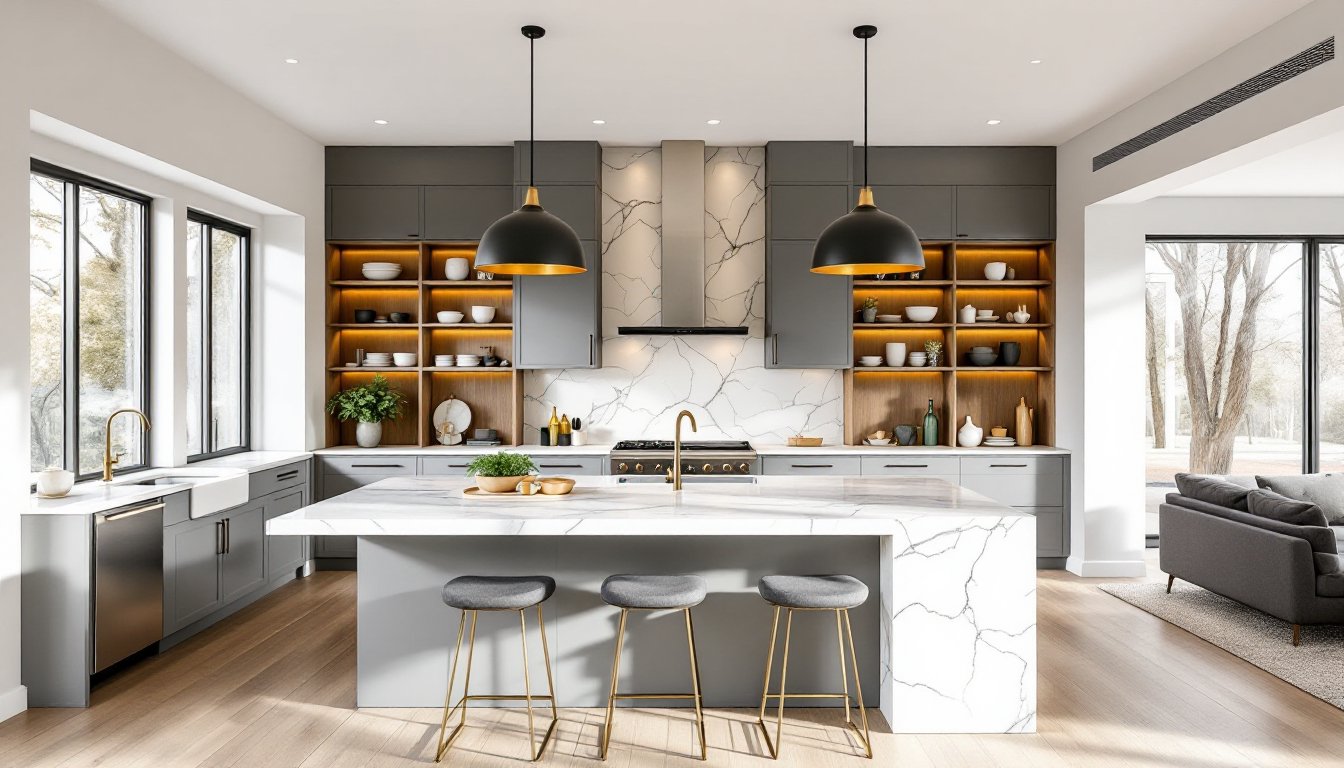
A modern luxury kitchen isn’t just about expensive appliances and marble counters. It’s a carefully engineered space where high-end materials, smart planning, and intentional design choices create a room that works as hard as it impresses. Whether you’re planning a full remodel or targeting strategic upgrades, understanding what separates a luxury kitchen from a standard one helps you invest wisely and build a space that delivers both function and lasting value.
Table of Contents
ToggleKey Takeaways
- A modern luxury kitchen balances high-end materials, smart planning, and intentional design—not just expensive appliances—to create spaces that function seamlessly while impressing visually.
- Invest your budget strategically: prioritize cabinetry quality (40-50% of budget), countertops, primary appliances, and layered lighting, which deliver lasting value in a luxury kitchen design.
- Modern luxury kitchens feature integrated appliances, handleless cabinetry, monochromatic palettes, and dedicated prep zones that accommodate multiple cooks and reduce workflow bottlenecks.
- Proper ventilation, lighting, and space planning are non-negotiable: range hoods must match BTU output, task lighting eliminates prep shadows, and islands need 42-54 inches clearance for safe, efficient cooking.
- Save costs without sacrificing luxury by choosing subway tile backsplashes over slabs, luxury vinyl plank flooring over engineered hardwood, and quality countertop appliances over built-in alternatives.
- A luxury kitchen remodel averages $75,000–$150,000+, with custom cabinetry and professional-grade appliances representing the largest investments—plan for permits if structural changes are required.
What Defines a Modern Luxury Kitchen?
Modern luxury kitchens prioritize clean lines, concealed storage, and a seamless blend of form and function. Unlike traditional luxury spaces heavy on ornamentation, modern designs lean on material quality and precision craftsmanship.
Key markers include:
- Integrated appliances that sit flush with cabinetry (panel-ready refrigerators, dishwasher drawers)
- Handleless cabinetry with push-to-open mechanisms or recessed pulls
- Minimal upper cabinets or open shelving to maintain sightlines
- Monochromatic or two-tone palettes (matte black, warm neutrals, deep navy)
- Professional-grade appliances (induction cooktops, built-in espresso stations, steam ovens)
You’ll also notice an emphasis on the work triangle evolution, many luxury kitchens now feature dedicated prep zones, beverage stations, and baking centers that go beyond the traditional stove-sink-fridge layout. This approach accommodates multiple cooks and reduces bottlenecks during meal prep.
A modern luxury kitchen also respects the relationship between kitchen and living spaces. Open-plan layouts demand that kitchens look composed from every angle, which is why you’ll see waterfall-edge islands, back-painted glass backsplashes, and carefully concealed venting solutions. If your kitchen is visible from a great room or dining area, every surface becomes a design opportunity.
Essential Design Elements for Modern Luxury Kitchens
High-End Materials and Finishes
Countertops set the tone. Quartzite and porcelain slabs have largely replaced granite in high-end projects due to their durability and wide range of finishes, from matte to polished, marble-look to concrete replica. Expect slabs in 3 cm thickness for islands and perimeters. Porcelain resists staining better than natural stone and can handle heat up to 500°F, making it ideal near cooktops.
Cabinetry in luxury kitchens uses plywood box construction (not particleboard) with dovetail drawer joints and soft-close hardware on every door and drawer. Popular finishes include matte lacquer, oiled walnut, white oak with a cerused finish, and textured laminates that mimic concrete or linen. When reviewing cabinet quotes, confirm whether the price includes full-extension drawer glides rated for 100+ pounds, cheap glides fail first.
Backsplashes are going bigger. Full-height slab backsplashes (floor to ceiling behind the range or sink wall) create a sculptural effect and reduce grout lines. Alternatives include large-format tile (12″ × 24″ or larger), metal tiles in brushed brass or blackened steel, and book-matched stone where two slabs mirror each other.
Flooring needs to handle spills and heavy foot traffic. Engineered hardwood (7-9 mm wear layer) holds up better than solid wood in kitchens due to dimensional stability. Luxury vinyl plank (LVP) has improved dramatically, look for products with a 20 mil wear layer and rigid core construction. Porcelain tile that mimics wood or concrete is another durable option, though it requires skilled installation to avoid lippage on large-format tiles.
Smart Technology Integration
Smart kitchens in 2026 go beyond voice-activated faucets. Luxury projects now include:
- Induction cooktops with integrated ventilation (downdraft or flush-mount hoods)
- Smart refrigerators with internal cameras, inventory tracking, and app-controlled temperature zones
- Touchless faucets with programmable presets for filling pots or washing hands
- Under-cabinet lighting with tunable color temperature (2700K-5000K) and motion sensors
- Appliance hubs that sync ovens, dishwashers, and coffee systems to a single app
If you’re integrating smart tech, plan for dedicated 20-amp circuits for high-draw appliances and ensure your Wi-Fi mesh network covers the kitchen. Many smart appliances fail due to weak connectivity, not faulty hardware. Some homeowners installing connected systems also integrate them into luxury smart home platforms for centralized control.
Safety note: Any work involving new circuits or panel upgrades requires an electrician and a permit. Kitchen circuits must meet NEC Article 210.52 requirements (two 20-amp small-appliance branch circuits minimum).
Top Layout and Space Planning Strategies
Layout determines whether a luxury kitchen functions or frustrates. Start with these planning rules:
Islands need clearance. Maintain 42-48 inches between the island and perimeter cabinets for single-cook kitchens, 48-54 inches if two people work simultaneously. Islands under 4 feet long feel cramped: 8-10 feet is ideal for seating and prep space.
Seating at islands requires 15 inches of overhang for knees (24 inches is more comfortable). If the overhang exceeds 12 inches, you’ll need support brackets or corbels unless using a structural countertop material. Building codes may require this support per IRC Table R502.3.1 for cantilevered loads.
Appliance placement affects workflow. Don’t box yourself in: place the dishwasher within 36 inches of the sink, locate the microwave 15 inches above the counter (not higher, it’s a burn risk when removing hot food), and ensure the refrigerator door swing doesn’t block traffic.
Pantry storage is non-negotiable in luxury kitchens. Walk-in pantries with adjustable wire shelving or custom cabinetry keep dry goods organized. If space is tight, tall pull-out pantry cabinets (18-24 inches wide, full height) maximize vertical storage. Design inspiration often references high-end storage solutions that conceal clutter while maintaining accessibility.
Ventilation gets overlooked. Range hoods should move at least 1 CFM per 100 BTU of cooktop output. A 36-inch gas range at 60,000 BTU needs a 600 CFM hood minimum. Undersized hoods leave grease on cabinets and odors in the house. If your layout demands a downdraft vent, expect reduced performance compared to overhead hoods, they work but require higher CFM ratings.
Lighting Solutions That Elevate Your Kitchen
Luxury kitchens use layered lighting: ambient, task, and accent. Relying on a single source leaves shadows on counters and makes prep work harder.
Ambient lighting provides overall illumination. Recessed LED cans (4-6 inch) spaced 4-6 feet apart in a grid pattern work for most kitchens. Dimmer switches (use ELV or TRIAC dimmers rated for LED loads) let you adjust brightness for cooking versus entertaining.
Task lighting targets work zones. Install under-cabinet LED strips or puck lights 18 inches apart to eliminate shadows on counters. Look for lights with a CRI (Color Rendering Index) above 90, anything lower distorts food colors. Hardwired options offer cleaner aesthetics than plug-in strips but require fishing wire through cabinets.
Accent lighting adds drama. LED strip lighting inside glass-front cabinets or along toe kicks creates subtle glow. Pendant lights over islands should hang 30-36 inches above the counter, high enough to avoid head bumps, low enough to provide focused light. For an 8-foot island, use two to three pendants spaced evenly.
Statement fixtures are trending in 2026. Oversized drum pendants, geometric cage lights, and sculptural chandeliers add personality without sacrificing function. If you’re shopping fixtures, design publications frequently showcase current lighting trends in luxury spaces.
Practical tip: Install lighting on separate switches or smart dimmers so you can control zones independently. A single switch controlling all kitchen lights limits flexibility.
Safety note: Any new lighting circuits require a licensed electrician. Kitchens are wet locations near the sink, fixtures within certain zones must be rated for damp or wet conditions per NEC standards.
Budget-Conscious Luxury: Where to Invest and Where to Save
Luxury doesn’t mean maxing out every line item. Strategic spending delivers high-end results without the six-figure price tag.
Invest in:
- Cabinetry quality: This is 40-50% of your budget. Well-built boxes with premium hardware last decades. Cheap cabinets sag and fail within five years.
- Countertops: Visible surfaces matter. A quartz or quartzite perimeter with a waterfall edge island creates instant luxury.
- Primary appliances: A quality range (gas, dual-fuel, or induction) and refrigerator are daily-use workhorses. Don’t skimp here.
- Lighting: Proper task and ambient lighting transforms how a space feels and functions.
Save on:
- Trendy hardware: Swapping cabinet pulls and knobs is a $200 DIY update. Start with timeless options: you can change them later.
- Backsplash materials: A subway tile backsplash in a classic pattern costs a fraction of slab and still looks sharp. Save the slab for the range wall only.
- Flooring: LVP with a realistic wood grain and texture performs as well as engineered hardwood at half the cost. Most guests won’t notice.
- Small appliances: A built-in coffee maker is nice but not essential. A high-quality countertop model delivers the same coffee.
DIY opportunities include demolition (if you’re keeping the layout), painting walls, installing backsplash tile (if you’re comfortable with a wet saw and tile spacers), and assembling flat-pack cabinets. Leave plumbing relocation, gas line work, and electrical to licensed pros.
Cost expectations (as of 2026, U.S. averages): A luxury kitchen remodel runs $75,000-$150,000+ depending on size, location, and finishes. Custom cabinetry alone can hit $25,000-$50,000 for a 200-square-foot kitchen. Semi-custom cabinets bring that down to $15,000-$30,000. Appliance packages (range, hood, refrigerator, dishwasher, microwave) range from $8,000 (mid-grade) to $40,000+ (professional-grade). These figures fluctuate with material costs and regional labor rates.
For homeowners prioritizing sustainability alongside luxury, exploring eco-friendly upgrades can deliver both performance and long-term value. Resources like The Kitchn also offer practical ideas for blending style with smart material choices.
If your project involves structural changes, removing walls, relocating plumbing, or adding windows, expect to pull permits. Load-bearing wall removal requires an engineer’s stamp and a steel or LVL beam installation. Don’t skip this step: unpermitted structural work complicates resale and creates liability.