Upgrading a bathroom doesn’t always require tearing out walls or rerouting plumbing. Sometimes the difference between builder-grade and boutique-hotel feel comes down to the details: the weight of a soap dispenser in your palm, the warmth of a towel after a shower, the finish on a tissue box holder. Luxury bathroom accessories set the tone for the entire space, turning a functional room into a retreat worth lingering in. This guide covers what separates true luxury from marketing hype, which accessories deliver the best return on investment, and how to install them without hiring a contractor.
Table of Contents
ToggleKey Takeaways
- True luxury bathroom accessories prioritize durable materials like solid brass and stainless steel over price alone, with functional engineering details that solve everyday problems and outlast decades.
- Premium towel warmers, designer soap dispensers, and vanity organizers are essential luxury bathroom accessories worth the investment, delivering both comfort and reduced maintenance through thoughtful design.
- Solid brass, stainless steel (grade 304 or 316), and natural stone offer superior longevity compared to zinc alloy and chrome-plated plastic, which corrode within 2–3 years in humid bathrooms.
- Matching finishes across all accessories—such as matte black, brushed nickel, or oil-rubbed bronze—creates a cohesive, high-end look that outshines mixing clashing styles.
- Proper installation using stud finders, toggle bolts, and carbide-tipped bits protects your luxury bathroom accessories investment and ensures level, durable mounting without professional contractors.
- Bringing finish samples home to test under your bathroom’s natural and LED lighting prevents costly color mismatches, while timer controls and compartmentalized organizers add practical luxury beyond aesthetics.
What Makes Bathroom Accessories Truly Luxurious?
Luxury isn’t just a price tag. It’s durability, finish quality, and thoughtful engineering.
High-end luxury bathroom products start with materials that resist corrosion in humid environments. Solid brass construction with multi-layer finishes (brushed nickel, oil-rubbed bronze, polished chrome) outlasts zinc alloy or plastic by decades. Look for pieces with a minimum of 5-year warranties, anything less suggests corners were cut.
Weight matters. Premium soap dispensers, toothbrush holders, and towel bars have heft because they’re machined from solid material, not hollow castings. Pick one up. If it feels substantial, that’s a good sign.
Functional design separates the best from the rest. A luxury toothbrush holder drains water to prevent mildew. A tissue box cover has a weighted base so it doesn’t slide when you pull a tissue. Towel warmers maintain consistent heat distribution across all bars, not just the top rail. These aren’t cosmetic upgrades, they solve everyday annoyances.
Finally, luxury bathroom accessories brands often provide replacement parts. If a soap pump wears out after five years, you can order a new mechanism instead of replacing the entire unit. That’s sustainability and value.
Essential Luxury Bathroom Accessories Worth the Investment
Not every accessory deserves the luxury treatment. Focus your budget on pieces you interact with daily or that solve specific comfort problems.
Premium Towel Warmers and Heated Towel Racks
Towel warmers deliver tangible comfort and practicality. Hardwired units (120V or 240V) require an electrician and a dedicated circuit in most jurisdictions, check your local electrical code. Plug-in models offer easier installation but need a GFCI-protected outlet within reach, per NEC Article 406.9.
Look for racks with 100–150 watts of heating power for standard bath towels. Stainless steel models (grade 304 or higher) resist rust in steam-heavy bathrooms. Wall-mounted units should anchor into studs or use heavy-duty toggle bolts rated for at least 50 lbs if hitting drywall alone.
Timer controls are worth the extra $30–$50. Set the warmer to heat 30 minutes before your morning shower, then shut off automatically. That’s luxury bathroom accessories sets working smarter, not just looking prettier.
Designer Soap Dispensers and Vanity Organizers
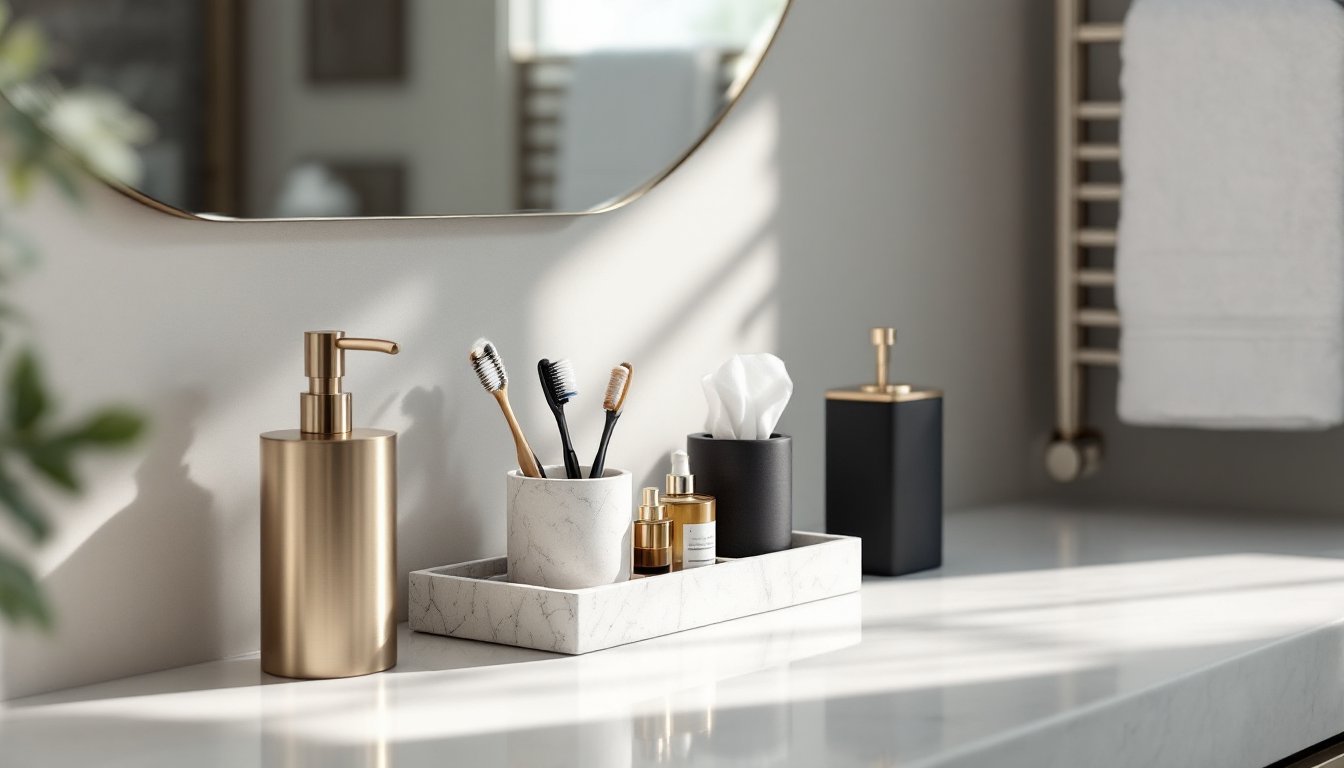
A quality soap dispenser with a brass or stainless pump mechanism lasts years longer than the plastic pumps in drugstore bottles. Countertop models with 8–12 oz capacity reduce refill frequency. Wall-mounted dispensers free up counter space but require careful installation, mount into studs or use appropriate anchors for tile backing.
Vanity organizers in natural stone, teak, or powder-coated steel keep counters tidy without cheap plastic trays. Compartmentalized designs for cotton swabs, makeup brushes, and hair ties prevent the junk-drawer effect. Non-slip bases or cork feet protect countertops from scratches.
If your vanity has limited space, tiered organizers maximize vertical storage. Match finishes across all accessories (all matte black, all brushed gold) for a cohesive look that high-end interior designers emphasize in upscale projects.
Materials That Define High-End Bathroom Accessories
Material choice drives both aesthetics and longevity. Here’s what to look for, and what to avoid.
Solid brass is the gold standard for towel bars, robe hooks, and toilet paper holders. It won’t corrode, and the finish is applied over a dense base that resists chipping. Expect to pay $40–$150 per piece depending on finish complexity.
Stainless steel (304 or 316 grade) offers similar durability with a modern look. Grade 316 (marine-grade) handles salt air and high humidity better, ideal for coastal homes. Brushed finishes hide water spots better than polished.
Natural stone (marble, granite, travertine) brings texture and warmth to marble bath accessories, but requires sealing. Apply a penetrating sealer annually to prevent water staining. Avoid limestone in high-traffic bathrooms, it’s too porous.
Teak and bamboo work well for soap dishes and organizers if treated with water-resistant finishes. Teak’s natural oils resist mold, but cheaper bamboo products can warp. Look for edge-grain construction and multiple coats of polyurethane.
Avoid zinc alloy marketed as “metal” or “brass-look.” It corrodes within 2–3 years in humid bathrooms. Chrome-plated plastic is even worse, the plating peels, leaving a patchy mess.
Glass and ceramic accessories (soap dishes, tumbler holders) need tempered glass or high-fired porcelain. Cheap ceramic crazes (develops hairline cracks) after repeated wetting and drying. Check for a manufacturer’s durability rating.
How to Choose Luxury Bathroom Accessories for Your Style
Matching accessories to your bathroom’s design language keeps the space cohesive.
For modern minimalist bathrooms, stick with geometric shapes and monochromatic finishes. Matte black or brushed nickel pairs well with floating vanities and frameless mirrors. Wall-mounted accessories keep lines clean.
Transitional spaces blend traditional and contemporary elements. Oil-rubbed bronze or brushed gold works here. Choose accessories with subtle curves rather than sharp angles or heavy ornamentation.
Traditional bathrooms call for polished chrome or nickel with classic detailing, think beaded edges or vintage-inspired mounting plates. Freestanding accessories (countertop soap dispensers, tissue box covers) fit better than wall-mounted in historically styled homes.
Spa-inspired retreats benefit from warm materials like teak, copper, or stone. Stick with luxury bathroom accessories sets in the same material family, mixing too many finishes (chrome, gold, copper) looks cluttered.
Before buying, bring home finish samples if possible. Hold them against your tile, vanity, and fixtures in both natural and artificial light. What looks warm bronze in the showroom might read orange under your LED bulbs.
Consistency matters more than individual piece beauty. A mid-range luxury bathroom accessories set with matching finishes looks more intentional than mixing high-end items in clashing styles.
Installation Tips for Your Luxury Bathroom Upgrade
Proper installation protects your investment and prevents damage to walls and tile.
Locate studs first. Use a stud finder to mark 16″ or 24″ centers. If your accessory mounting holes don’t align with studs, use toggle bolts rated for 50 lbs in drywall or plastic anchors with stainless screws in tile backer board.
Drilling into tile requires a carbide or diamond-tipped bit. Start with a small pilot hole (1/8″), then step up to final size. Use low speed (300–400 RPM) and constant light pressure, forcing it cracks the tile. Keep the bit and tile wet with a spray bottle to reduce heat.
Level everything. A towel bar that’s 1/4″ off level is immediately noticeable. Use a 4-foot level for bars longer than 18″. Mark both mounting holes, drill, then test-fit before applying any adhesive or anchors.
For heated towel racks, turn off power at the breaker before hardwiring. Follow the manufacturer’s wiring diagram exactly. Most require a dedicated 15-amp circuit. If you’re not comfortable working with electrical, hire a licensed electrician, permits are required for new circuits in most jurisdictions, and improper installation voids warranties.
Countertop accessories need no installation, but check that they won’t scratch surfaces. Felt or rubber pads on the bottom protect polished tile or stone.
Wear safety glasses when drilling overhead or into tile. Ceramic shards are sharp and fast. A dust mask helps if drilling multiple holes, tile dust contains silica.
After installation, clean off any adhesive residue or caulk immediately with rubbing alcohol. Once it cures, it’s much harder to remove without damaging finishes.