A well-designed bathroom deserves more than builder-grade fixtures and blank walls. Luxury bathroom wall art completes the space, pulling together tile, hardware, and finishes into a cohesive design statement. But bathrooms present unique challenges, humidity, moisture, and temperature swings can damage the wrong materials. This guide walks through selecting, placing, and installing art that’s both beautiful and built to last in a high-moisture environment. Whether you’re upgrading a powder room or creating a spa-like primary bath, the right art makes the difference between a functional space and a true retreat.
Table of Contents
ToggleKey Takeaways
- Luxury bathroom wall art elevates the space from functional to intentionally designed by balancing hard surfaces, anchoring visual interest, and creating focal points in both compact powder rooms and larger primary baths.
- Choose moisture-resistant materials like acrylic prints, metal art, or tempered glass for bathroom wall art, as canvas, paper, and untreated wood will warp, fade, or deteriorate in humid environments.
- Hang art at 57 to 60 inches from the floor for standard gallery height, maintain 4 to 8 inches of clearance above mirrors or backsplashes, and position pieces 8 to 12 inches above freestanding tubs for optimal visual impact.
- Select art styles that complement your bathroom’s aesthetic—abstract and geometric for modern spaces, botanical and vintage pieces for traditional bathrooms, and nature-focused imagery for spa-inspired designs.
- Keep art at least 24 inches away from showerheads and water spray zones, ensure proper ventilation with an exhaust fan rated for your bathroom’s square footage, and use appropriate wall anchors or toggle bolts for safe, long-lasting installation.
- Balance cost and quality by investing in durable materials and professional framing rather than expensive pieces; a well-chosen $150 acrylic print properly placed outperforms poorly protected higher-priced art.
Why Wall Art Elevates a Luxury Bathroom
Wall art transforms a bathroom from purely functional to intentionally designed. It anchors the visual field, drawing the eye upward and making even compact spaces feel more finished.
In luxury bathrooms, art serves multiple purposes beyond decoration. It balances hard surfaces, tile, stone, glass, and metal, with texture and color. A thoughtfully chosen piece can echo the tones in veining on marble countertops or complement the finish on plumbing fixtures.
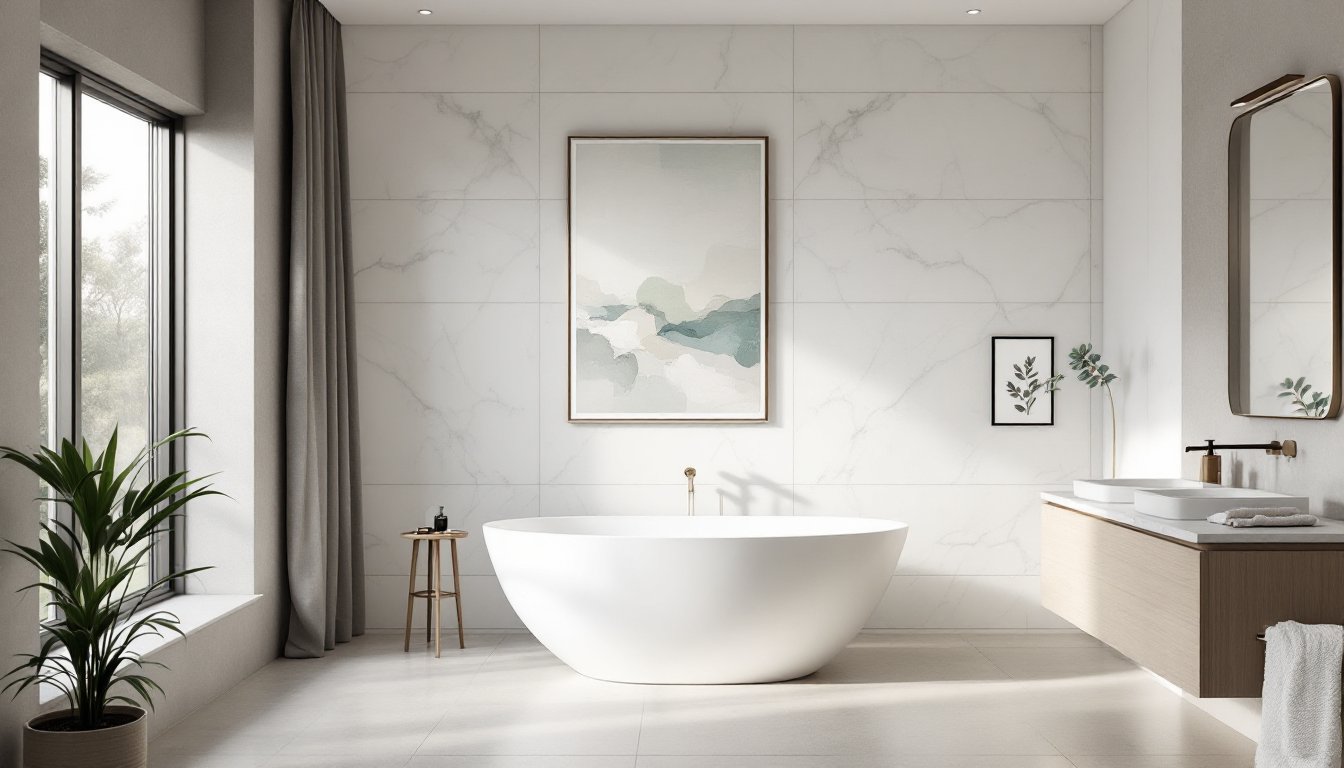
Art also defines zones in larger bathrooms. A statement piece above a freestanding tub creates a focal point separate from the vanity area. In powder rooms, where square footage is limited, a single bold piece can establish the entire aesthetic.
From a practical standpoint, art covers imperfections and breaks up expanses of tile that might otherwise feel cold or institutional. It’s the difference between a hotel bathroom and one that feels like home.
Finally, art communicates intentionality. A bathroom with carefully selected pieces signals that every detail has been considered, which is the hallmark of true luxury design.
Choosing the Right Art Style for Your Bathroom Aesthetic
Style cohesion matters more in bathrooms than in any other room. Because the space is small and highly designed, fixtures, tile, and hardware all make visual statements, art needs to complement rather than compete.
For modern or minimalist bathrooms with clean lines and monochromatic palettes, consider abstract prints, black-and-white photography, or line drawings. Geometric patterns work well, especially when they echo shapes in the tile layout or mirror frame. Keep frames simple: thin metal or floating mounts in matte black or brushed nickel.
In traditional or transitional bathrooms, botanical prints, vintage maps, or classic landscapes fit naturally. These spaces often feature warmer tones and more ornate details, so frames can be more substantial, think carved wood or antique brass. Paired correctly with timeless bathroom finishes, the art feels like an extension of the architecture.
Spa-inspired or contemporary bathrooms benefit from nature-focused art: ocean photography, serene landscapes, or organic abstracts in soft blues, greens, and grays. Large-scale pieces work especially well here, creating a sense of calm and openness.
Avoid overly busy patterns or jarring color contrasts. The bathroom should feel cohesive when you take in the whole space at once. If your tile or wallpaper already makes a bold statement, choose quieter art. If surfaces are neutral, the art can carry more visual weight.
Scale matters. A 5×7 print will disappear on a large wall. Plan for art that occupies roughly two-thirds to three-quarters the width of the furniture or fixture below it (vanity, tub, toilet tank).
Best Materials and Finishes for Bathroom Wall Art
Bathrooms are hostile environments for many art materials. High humidity, steam, and temperature fluctuations can warp, fade, or degrade the wrong choices. Selecting moisture-resistant materials is non-negotiable for longevity.
Canvas and Framed Prints
Canvas prints can work in bathrooms, but only with proper sealing. Look for giclée prints on canvas treated with a UV-protective and moisture-resistant coating. Uncoated canvas will absorb moisture, leading to sagging, mold, or mildew.
Frame choice matters as much as the print itself. Skip wood frames unless they’re sealed with marine-grade varnish or polyurethane. Moisture will warp untreated wood within months. Better options include powder-coated metal frames (aluminum or steel) or high-quality composite frames designed for high-humidity areas.
Behind the glass, use acrylic glazing instead of regular glass. Acrylic is lighter, won’t shatter if it falls, and resists condensation better. If you prefer glass, choose anti-reflective or UV-protective glass to prevent fading from bathroom lighting.
For framed prints, ensure the backing is sealed with waterproof tape or a moisture barrier. Standard cardboard backing will absorb humidity and deteriorate. Use acid-free matting and backing boards to prevent yellowing.
Avoid paper-based art without glass protection. Even in well-ventilated bathrooms, unprotected paper will eventually curl, fade, or develop water spots.
Metal, Acrylic, and Glass Art
These materials are bathroom workhorses. They’re naturally moisture-resistant and clean easily, making them ideal for high-traffic or frequently used bathrooms.
Metal art, whether laser-cut designs, embossed panels, or printed aluminum, handles humidity without issue. Powder-coated finishes resist rust and corrosion. Brushed or polished stainless steel, copper, and brass all hold up well. Metal art also adds dimension and texture that flat prints can’t match.
Acrylic prints (photos or designs printed directly onto acrylic panels) are increasingly popular for bathrooms. They’re lightweight, durable, and have a high-gloss, modern finish. Acrylic resists moisture completely and cleans with a damp cloth. The depth and vibrancy of colors on acrylic surpass traditional prints.
Glass art, including fused glass panels or printed tempered glass, works beautifully in luxury bathrooms. Tempered glass is impact-resistant and safe if it breaks. Glass art pairs well with contemporary design inspiration seen in upscale interiors.
Avoid materials like untreated wood sculptures, fabric-based pieces, or anything with exposed paper or cardboard. These will degrade quickly in a bathroom environment.
Placement Tips for Maximum Visual Impact
Where you hang art matters as much as what you hang. Poor placement can make even beautiful pieces feel awkward or out of scale.
Above the vanity is the most common spot, but height is critical. Hang the center of the art at 57 to 60 inches from the floor, which is standard gallery height and roughly eye level for most adults. If the vanity is tall or you’re working around a mirror, adjust so there’s 4 to 8 inches of space between the top of the mirror or backsplash and the bottom of the art.
Over a freestanding tub creates a dramatic focal point. Position the art so the bottom edge is 8 to 12 inches above the tub rim. This keeps it high enough to avoid splashes but low enough to feel connected to the fixture. Go larger here, undersized art floating above a tub looks unfinished.
On a side wall or facing the door works well in larger bathrooms. This creates interest when entering and breaks up long expanses of tile. Use the same 57-60 inch center-height rule.
Avoid placing art directly above the toilet tank in small powder rooms, it’s predictable and visually awkward. Instead, place it on the side wall opposite the vanity or above a towel bar.
Keep art at least 24 inches away from showerheads or direct water spray. Even moisture-resistant materials will suffer under constant water exposure. Ensure adequate ventilation in the bathroom, an exhaust fan rated for the room’s square footage (typically 1 CFM per square foot) prevents excessive humidity buildup.
For gallery walls, map the layout on paper first. Maintain 2 to 4 inches of spacing between frames for a cohesive look. In bathrooms, odd-numbered groupings (3 or 5 pieces) tend to feel more balanced than even numbers.
Mounting method matters. Use wall anchors or toggle bolts if you’re not hitting a stud, especially for pieces over 5 pounds. Drywall alone won’t hold weight reliably in a humid environment where the paper backing may soften over time. For tile walls, use tile-specific anchors or adhesive hooks rated for the weight.
DIY vs. Custom Art: What Works Best for Luxury Bathrooms
Both DIY and custom art have a place in luxury bathrooms, depending on budget, skill level, and the specific aesthetic you’re after.
DIY art works well when you’re comfortable with basic framing and have a clear vision. Printing high-resolution images at a local print shop and mounting them in moisture-resistant frames is straightforward. Online platforms like Shutterfly, Mpix, or local frame shops offer UV-resistant printing and acrylic glazing at reasonable prices. This approach suits those exploring various creative wall art ideas before committing to higher-end pieces.
For DIY projects, stick to simple, clean designs, complex installations or mixed-media pieces are harder to weatherproof properly. Ensure all materials are sealed or naturally moisture-resistant. If you’re reusing vintage frames, strip and reseal them with marine-grade spar urethane (2-3 coats) to prevent warping.
DIY also includes ready-made art from retailers like West Elm, CB2, or Pottery Barn. These pieces are often pre-treated for bathroom use, though you should verify moisture resistance before hanging.
Custom art is worth the investment when you want a statement piece that’s sized specifically for your space or when working with unusual wall dimensions. Custom framers can source moisture-resistant materials and build frames to exact specifications. Custom acrylic or metal prints elevate the space beyond off-the-shelf options.
Commissioned art, whether original paintings, photography, or mixed media, offers uniqueness that DIY can’t match. When commissioning, specify that the piece will hang in a bathroom. The artist can select appropriate substrates, sealants, and finishes. Budget for this: custom art typically starts at several hundred dollars and scales with size and artist reputation.
For homeowners seeking design inspiration for high-end spaces, custom pieces often tie together architectural details and finishes in a way that generic art cannot.
Hybrid approach: Buy high-quality prints or photography from online galleries (Minted, Saatchi Art, Society6) and have them professionally framed locally with bathroom-appropriate materials. This balances cost and quality.
Evaluate your skill level honestly. If you’re not confident drilling into tile or working with toggle bolts, hire a handyman for mounting. Poorly installed art in a bathroom is a safety issue, falling frames near tubs or toilets can cause injury.
Eventually, luxury is about curation and quality, not necessarily cost. A well-chosen $150 acrylic print in a perfect spot outperforms a $1,000 piece that’s the wrong scale or poorly protected. Invest where it counts: durable materials, proper framing, and thoughtful placement.