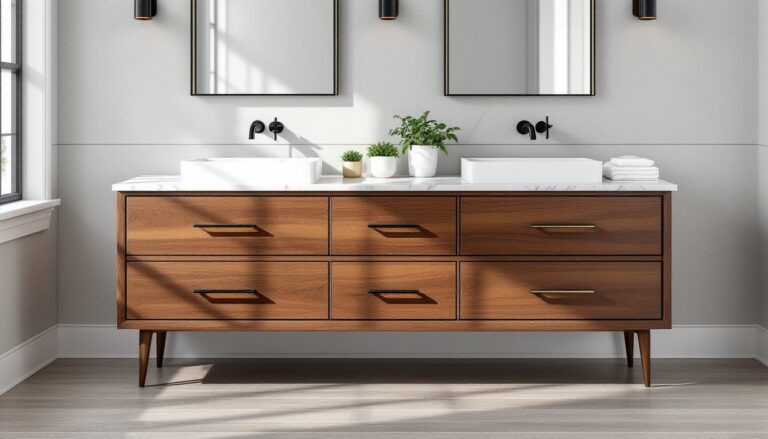

Choosing the right bathroom countertop isn’t just about aesthetics, it’s about durability, maintenance, and how well the surface holds up against daily splashes, humidity, and grooming products. Whether you’re renovating a powder room or overhauling a master bath, the countertop sets the tone for the entire space. From natural stone that ages beautifully to engineered surfaces that laugh at stains, today’s options span every budget and style. This guide breaks down 15 practical countertop ideas, covering materials, finishes, and design details that actually matter when you’re elbow-deep in a bathroom project.
Table of Contents
ToggleKey Takeaways
- Bathroom countertop ideas must prioritize moisture resistance and durability, as these surfaces endure constant water exposure, humidity, and grooming products that typical kitchen counters don’t face.
- Natural stone countertops like marble and granite offer timeless elegance but require periodic sealing, while engineered quartz provides virtually zero-maintenance, stain-resistant performance without ongoing upkeep.
- Budget-friendly alternatives like porcelain tile, laminate, and concrete deliver compelling style without luxury price tags, with large-format tiles and modern laminate finishes rivaling high-end slab materials.
- Edge profiles—from simple straight edges to dramatic waterfall designs—directly impact both aesthetics and functionality, allowing you to add personality while protecting cabinetry from water damage.
- Integrate your countertop choice with your bathroom’s overall style, matching material and finish (polished marble for traditional, quartz in solids for modern, concrete for industrial) to create a cohesive, long-lasting design.
Why Your Bathroom Countertop Choice Matters
Bathroom countertops take more abuse than most homeowners realize. They’re constantly exposed to water, heat from styling tools, cosmetics with pigments that stain, and cleaning chemicals that can etch or dull certain surfaces. Unlike kitchen counters, bathroom surfaces also contend with high humidity and poor ventilation in many homes.
Moisture resistance is non-negotiable. Materials that absorb water can harbor mold, warp, or develop stains over time. Porosity varies widely, granite needs periodic sealing, while quartz is virtually waterproof out of the box.
Edge overhang and backsplash integration affect both function and code compliance. Most countertops extend 1″ beyond the cabinet face to protect cabinetry from drips. A 4″ backsplash is standard, but full-height backsplashes (extending to the mirror or medicine cabinet) improve water protection and create a cohesive look.
Thickness matters too. Standard slabs are 3/4″ (actual 2 cm) or 1-1/4″ (3 cm). Thicker slabs feel more substantial and allow bolder edge profiles, but they’re heavier and cost more. If you’re DIYing the install, remember that 3 cm granite or quartz typically requires two people to maneuver safely.
Natural Stone Countertops for Timeless Elegance
Natural stone remains the gold standard for luxury bathroom countertops that age gracefully. Each slab is unique, with veining, color variation, and mineral deposits that you won’t find in manufactured materials.
Marble tops the list for classic elegance. Carrara and Calacatta are popular choices, offering soft white or gray backgrounds with delicate veining. The downside: marble is calcium-based, so it etches when exposed to acidic substances like lemon juice, vinegar, or some bathroom cleaners. Honed finishes hide etching better than polished surfaces. Expect to seal marble every 6–12 months with a penetrating sealer designed for natural stone.
Granite delivers serious durability. It resists scratches, heat, and stains better than marble, though it still requires periodic sealing, especially lighter colors, which tend to be more porous. Granite comes in hundreds of color variations, from speckled neutrals to dramatic blacks with gold flecking. It’s a workhorse material that suits traditional and contemporary bathrooms alike.
Soapstone is a lesser-known option with a matte, almost soapy texture. It’s non-porous and doesn’t require sealing, though many homeowners apply mineral oil to enhance its natural darkening and develop a rich patina over time. Soapstone is softer than granite, so it can scratch, but minor scratches sand out easily.
Quartzite (not to be confused with quartz) is a natural metamorphic stone that’s harder than granite and often features marble-like veining. It’s pricier but offers the aesthetics of marble with granite’s toughness. Like granite, it needs sealing.
Quartz and Engineered Surfaces: Low-Maintenance Luxury
Engineered surfaces combine the look of natural stone with practically zero maintenance. Quartz (sometimes called engineered stone) is about 90–95% ground natural quartz mixed with polymer resins and pigments. The result is a non-porous, stain-resistant surface that never needs sealing.
Quartz slabs come in consistent patterns, ideal if you want a uniform look across a double vanity without worrying about matching veining. Manufacturers like Caesarstone, Cambria, and Silestone offer colors ranging from pure whites to deep charcoals, plus realistic marble and granite lookalikes. Some even incorporate recycled glass or metal flecks for visual interest.
One limitation: quartz isn’t UV-stable, so it can discolor in direct sunlight. In bathrooms with large windows, consider window treatments or choose a lighter color that hides any subtle fading. Also, while quartz resists heat better than laminate, it’s not heatproof, set down a hot flat iron on a trivet, not directly on the surface.
Solid surface materials like Corian are another engineered option. They’re seamless (joints are chemically bonded and invisible), repairable (scratches sand out), and come in colors you won’t find in natural stone. Solid surface is softer than quartz, so it scratches more easily, but that same softness makes it simple to restore. It’s a solid mid-range option when budget and repairability matter.
Budget-Friendly Countertop Materials That Don’t Compromise Style
Not every bathroom renovation has a stone budget. These materials deliver style and function without the luxury price tag.
Ceramic or porcelain tile is a DIY-friendly choice that costs a fraction of slab stone. Large-format tiles (12″×24″ or bigger) minimize grout lines and create a cleaner look. Porcelain is denser and more water-resistant than ceramic, making it the better pick for high-use bathrooms. The grout lines require sealing and regular cleaning to prevent mildew, but the material itself is nearly indestructible. Many design galleries feature tile countertops that rival slab installations in visual impact.
Laminate has come a long way from the Formica of decades past. Modern laminate mimics stone, concrete, and wood with convincing realism. It’s lightweight, easy to cut, and affordable, often under $30 per square foot installed. Laminate is water-resistant but not waterproof: seams and edges are vulnerable if water seeps underneath. Use a bead of silicone caulk where the backsplash meets the counter and avoid letting standing water sit on seams.
Butcher block or solid wood adds warmth and a spa-like feel to bathrooms. Maple, oak, and walnut are common choices. Wood requires a durable finish, marine-grade polyurethane or a penetrating oil finish designed for wet environments. It’s high-maintenance and will show water rings if you’re not diligent, but the look is unmatched for rustic or farmhouse styles. Keep it away from the sink splash zone or pair it with an undermount sink and careful sealing.
Concrete offers industrial chic at a moderate cost, especially if you DIY. Precast or poured-in-place concrete can be tinted, textured, or embedded with decorative aggregates. Concrete is porous and must be sealed with a food-safe, water-resistant sealer. Hairline cracks are common and part of the aesthetic. Expect to reseal annually and embrace the patina.
Creative Edge Profiles and Finishing Touches
Edge profiles are where personality shines through. The edge you choose affects both aesthetics and how the countertop handles drips.
Straight or square edges are the most affordable and contemporary. They work well on modern vanities with clean lines. Add a small bevel (1/8″ chamfer) to soften the edge and reduce chipping.
Eased or rounded edges slightly round over the top corner for a softer feel. It’s a subtle upgrade that’s comfortable against wrists and less likely to chip than a sharp 90-degree corner.
Bullnose edges curve over the top and sometimes the bottom, creating a smooth, pillow-like profile. It’s classic and family-friendly but can read as dated if overdone. Half-bullnose (rounded top, square bottom) is a good compromise.
Ogee and dupont edges add traditional elegance with their S-curves and decorative steps. These profiles require thicker slabs (3 cm minimum) and are best suited to formal or transitional bathrooms. They also increase fabrication cost because they’re more labor-intensive to cut.
Waterfall edges wrap the countertop material down the side of the vanity, creating a continuous vertical surface. It’s a dramatic, modern look that works especially well with bold veining in marble or quartzite. Waterfall edges use more material and require careful seam placement, so budget accordingly.
Integrated sinks (where the sink and countertop are one seamless piece) are possible with solid surface, concrete, and some quartz fabricators. They eliminate the sink-to-counter seam where grime builds up, making cleaning effortless. Undermount sinks offer a similar clean look and are easier to source.
Matching Your Countertop to Your Bathroom Style
The right countertop anchors your design vision and coordinates with tile choices and fixtures.
For modern minimalist bathrooms, stick with quartz or porcelain in solid colors, whites, grays, or blacks. Pair with matte black or brushed nickel fixtures and a square or straight edge profile. Integrated sinks reinforce the seamless look.
Transitional styles blend traditional warmth with contemporary clean lines. Marble or quartzite with subtle veining works well here, especially with an eased or half-bullnose edge. Pair with a mix of metal finishes (brushed gold and chrome) and classic subway tile.
Farmhouse or cottage bathrooms call for butcher block, marble, or concrete. Light, natural tones and visible texture add character. An apron-front or vessel sink complements the rustic vibe. Don’t be afraid of imperfection, these styles embrace patina and wear.
Industrial bathrooms lean into concrete, soapstone, or dark granite with matte finishes. Exposed plumbing, metal accents, and large-format tile complete the look. Straight edges and minimal ornamentation keep things honest and utilitarian.
For traditional or luxury bathrooms, marble with a polished finish and ogee edge delivers timeless sophistication. Pair with detailed cabinetry, vintage-inspired fixtures, and a full-height backsplash. Calacatta marble or quartzite with bold veining makes a statement worthy of the investment. Detailed renovation guides can help estimate costs for high-end finishes.
Small bathroom tip: lighter countertops (whites, creams, soft grays) reflect light and make compact spaces feel larger. Avoid busy patterns or dark colors that visually weigh down tight quarters.
Conclusion
The best bathroom countertop balances your aesthetic goals, maintenance tolerance, and budget constraints. Natural stone offers irreplaceable character: engineered surfaces deliver worry-free performance: budget materials prove that style doesn’t require a fortune. Don’t overlook edge profiles and sink integration, they’re the details that separate a competent install from a polished one. Take your time selecting samples, test them in your bathroom’s lighting, and remember that the countertop isn’t just a surface, it’s the foundation of your daily routine for years to come.