A master bathroom isn’t just a place to get ready in the morning, it’s a private sanctuary where homeowners decompress after long days. In 2026, luxury modern design blends clean minimalism with indulgent comfort, creating spaces that feel like five-star spa retreats. Whether planning a full gut renovation or targeted upgrades, understanding current trends in fixtures, materials, and tech integration helps prioritize investments that deliver lasting value. This guide covers statement features, premium finishes, smart systems, lighting strategies, storage solutions, and color trends that define today’s upscale master baths.
Table of Contents
ToggleKey Takeaways
- Modern luxury master bathroom ideas center on sculptural statement pieces like freestanding tubs and curbless walk-in showers that combine functionality with spa-like aesthetics.
- Premium materials including large-format porcelain tile, quartz countertops, and natural stone accents in matte finishes define upscale bathrooms while requiring careful installation and maintenance.
- Smart technology integration—from heated floors and digital shower controls to smart toilets with bidet functions—transforms bathrooms into responsive, personalized retreats.
- Strategic lighting layering with task lighting around mirrors, ambient recessed fixtures, and accent highlights creates both functionality and ambiance throughout the space.
- Smart storage solutions using floating vanities, recessed medicine cabinets, and niche shelving maintain the minimalist aesthetic essential to luxury modern design.
- Neutral color palettes in warm whites and soft grays paired with matte finishes and subtle accent colors through accessories create timeless, elegant master bathroom environments.
Statement Features That Define Modern Luxury Bathrooms
Modern luxury bathrooms anchor around sculptural fixtures that serve as functional art pieces. These elements set the tone for the entire space and often become the first feature guests notice.
Freestanding Tubs and Walk-In Showers
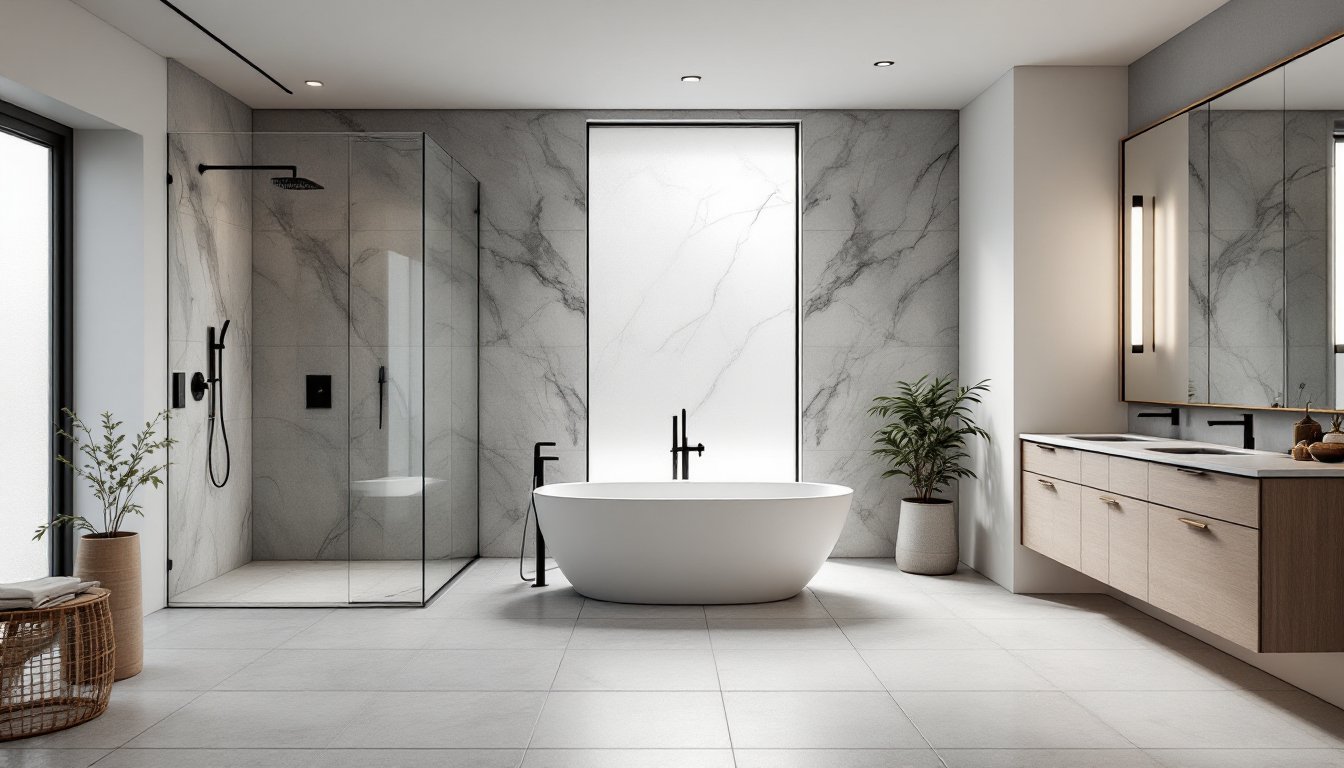
Freestanding tubs remain the centerpiece of high-end master baths. Contemporary designs favor sleek silhouettes, oval soaking tubs in matte white or black acrylic, along with stone resin composites that retain heat longer than traditional materials. Placement matters: positioning the tub beneath a window or centered on a feature wall maximizes visual impact. Expect these tubs to measure 60-72 inches in length and require reinforced flooring if going with cast iron or natural stone versions exceeding 300 pounds when filled.
Walk-in showers have evolved from basic enclosures to spa-like experiences. Curbless designs with linear drains create seamless floor transitions, critical for aging-in-place considerations and modern aesthetics. Frameless glass panels (typically ⅜-inch or ½-inch tempered glass) maintain open sightlines. Many homeowners now incorporate steam shower features with multiple body jets and overhead rainfall heads measuring 10-12 inches square. Plan for proper ventilation: steam applications require vapor barriers, sloped ceilings to prevent dripping, and dedicated exhaust fans rated for high-humidity environments.
Premium Materials and Finishes for an Upscale Look
Material selection separates builder-grade renovations from custom luxury projects. Modern design emphasizes natural textures paired with refined industrial elements.
Large-format porcelain tile (24×48 inches or larger) dominates floors and walls, reducing grout lines for cleaner visuals and easier maintenance. Book-matched marble slabs create dramatic accent walls but require professional installation and regular sealing, marble’s porosity makes it vulnerable to etching from acidic cleaners. For bathroom tile installations, consider rectified edges that allow tighter grout joints of ⅛ inch or less.
Quartz countertops have overtaken marble for vanity surfaces due to non-porous durability and consistency. Standard thickness runs 2cm (¾ inch) or 3cm (1¼ inch), with waterfall edge details adding contemporary flair. Pair with undermount sinks in fireclay, ceramic, or hammered metal finishes.
Hardware and fixtures in matte black, brushed brass, or polished nickel establish the design palette. Wall-mounted faucets create floating vanity looks and simplify countertop cleaning. Avoid mixing more than two metal finishes in one space, the approach risks visual clutter. When selecting shower valves, specify thermostatic controls that maintain constant temperature even when other fixtures draw water elsewhere in the home.
Smart Technology Integration for Ultimate Comfort
Technology transforms luxury bathrooms from static spaces into responsive environments tailored to individual preferences. Integration should feel intuitive rather than complicated.
Smart toilets with bidet functions, heated seats, and automatic lids represent the most noticeable upgrade. Higher-end models include UV sanitization, night lights, and deodorizers. Installation requires dedicated electrical circuits and proper rough-in dimensions (typically 12 inches from finished wall to drain center).
Digital shower controls allow users to program water temperature, flow rate, and spray patterns through wall-mounted touchscreens or smartphone apps. Systems can store multiple user profiles, essential for couples with different preferences. Most operate via Wi-Fi and integrate with voice assistants. Note that digital valves require electrical connections and battery backups to prevent lockouts during power outages.
Heated flooring provides consistent warmth underfoot. Electric radiant mats install directly beneath tile using thin-set mortar, adding minimal height (⅛ inch) compared to hydronic systems. Budget approximately 12 watts per square foot and pair with programmable thermostats that warm floors before morning routines. Always test systems before laying final tile, replacing damaged heating elements requires tearing out finished flooring.
Integrated speakers and steam controls round out the smart bath experience. Moisture-resistant Bluetooth speakers mount flush in shower ceilings, while dedicated steam generators (sized at 1 kilowatt per 150 cubic feet of shower space) require 240V circuits and water supply lines.
Lighting Design That Creates Ambiance and Function
Lighting makes or breaks bathroom functionality. Modern luxury design layers multiple light sources at different heights and intensities.
Task lighting around vanity mirrors demands careful placement. Vertical sconces flanking mirrors at 60-65 inches above finished floor eliminate shadows on faces better than overhead fixtures alone. Choose LED bulbs rated 3000K-3500K (warm white) with CRI values above 90 for accurate color rendering, critical when applying makeup or shaving. Dimmable controls adjust brightness for nighttime use.
Ambient lighting provides overall illumination without harsh glare. Recessed LED cans (4-inch or 6-inch) spaced 4-6 feet apart create even coverage. In shower enclosures, specify wet-rated trim housings and consider adding niche lighting to highlight tilework or display shelving. All bathroom recessed fixtures within shower zones must meet UL1598 standards for damp or wet locations.
Accent lighting adds drama through backlit mirrors, toe-kick LEDs beneath floating vanities, or strip lights in cove molding. RGB color-changing strips controlled via app allow mood customization, though warm white remains most flattering for daily grooming tasks. Linear LED strips typically consume 4-6 watts per foot and require compatible dimmers to avoid flickering.
Natural light through windows or skylights remains the gold standard. Frosted or textured glass maintains privacy while diffusing daylight. For homes featured in design publications, oversized windows often become architectural focal points. Always balance glazing with adequate ventilation to manage humidity.
Storage Solutions That Maintain Clean, Minimalist Lines
Luxury modern design prioritizes visual calm, which requires hiding everyday clutter behind thoughtful storage solutions.
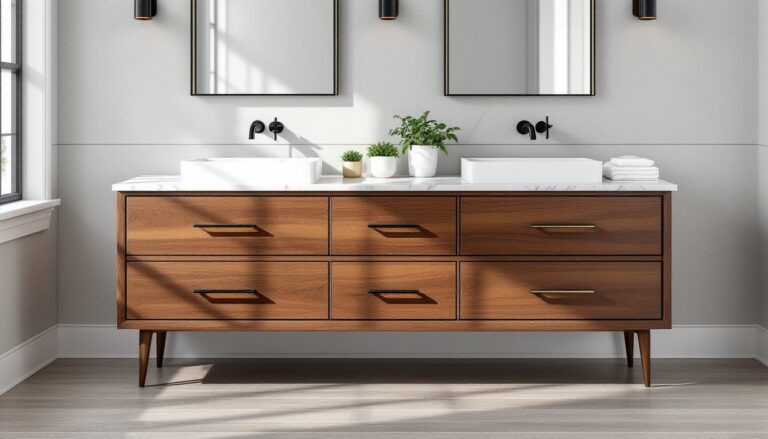
Floating vanities create airy aesthetics and simplify floor cleaning. Wall-mounted cabinets must attach to blocking installed between studs during rough framing, typical vanities span 48-72 inches and require support for 200+ pounds including countertop and contents. Soft-close drawer mechanisms and push-to-open hardware eliminate visible handles for seamless fronts.
Recessed medicine cabinets built into wall cavities between studs (14½ inches wide in standard 16-inch on-center framing) provide concealed storage without protruding into room space. Models with integrated LED lighting and electrical outlets double functionality. Coordinate placement with plumbing and electrical during rough-in phases, retrofitting after drywall complicates installation.
Floor-to-ceiling linen cabinets offer abundant storage while maintaining clean vertical lines. Integrated units matching vanity finishes create cohesive built-in looks. Interior organizers with pull-out shelves, tilt-out hampers, or charging drawers maximize usability.
Niche shelving carved into shower walls stores toiletries without bulky caddies. Standard niche dimensions run 12×12 inches or 12×24 inches vertically, framed during shower pan installation with sloped bottoms for drainage. Waterproofing membranes must extend completely around niches to prevent leaks. For those planning extensive renovations similar to upscale residential projects, consider heated niche shelves that keep bottles warm and prevent condensation.
Color Palettes and Design Trends for 2026
Current color trends balance neutral foundations with strategic accent moments that add personality without overwhelming spaces.
Neutral bases in warm whites, soft grays, and greige tones dominate walls and large tile surfaces. These create calming backdrops that won’t feel dated in five years. Benjamin Moore’s Simply White (OC-117) and Sherwin-Williams’ Agreeable Gray (SW 7029) remain popular wall colors. Many designers at firms featured on home design platforms now specify off-white grout instead of bright white, it hides discoloration better over time.
Natural material palettes incorporate wood-look tile (6×36-inch or 8×48-inch planks), warm-toned marble, and textured stone. White oak floating vanities paired with matte black fixtures create striking contemporary contrasts. Terrazzo is resurfacing in modern iterations, subtle aggregates in cream or gray matrices rather than bold 1980s versions.
Accent colors appear through accessories, artwork, and occasional tile borders rather than permanent fixtures. Deep jewel tones like emerald, navy, or charcoal work as feature wall colors or vanity finishes. Metallic accents in brass and bronze add warmth against cool gray schemes.
Matte finishes prevail over glossy surfaces. Matte black shower fixtures, flat-finish wall paint, and honed (rather than polished) stone countertops reduce glare and hide water spots. This shift reflects broader preferences for understated elegance over high-shine glamour. Reserve glossy tile for small accent areas where light reflection enhances dimension.