Creating a luxury bathroom isn’t just about expensive price tags, it’s about thoughtful design choices, quality materials, and features that make everyday routines feel indulgent. Whether you’re planning a full renovation or upgrading key elements, understanding what separates a standard bath from a spa-worthy retreat helps you invest where it counts. This guide walks through the materials, fixtures, technology, and design strategies that deliver real luxury without the guesswork. If you’re ready to move beyond builder-grade basics, here’s what actually works.
Table of Contents
ToggleKey Takeaways
- Luxury bathroom designs require a minimum of 80–100 square feet with dedicated zones, seamless details like flush tile transitions, and customized features that reflect how homeowners actually live, not just premium price tags.
- Invest in durable, quality materials: marble slabs ($50–$150+ per sq ft), solid brass fixtures with PVD finishes, and large-format porcelain tiles offer both aesthetic impact and long-term performance in wet environments.
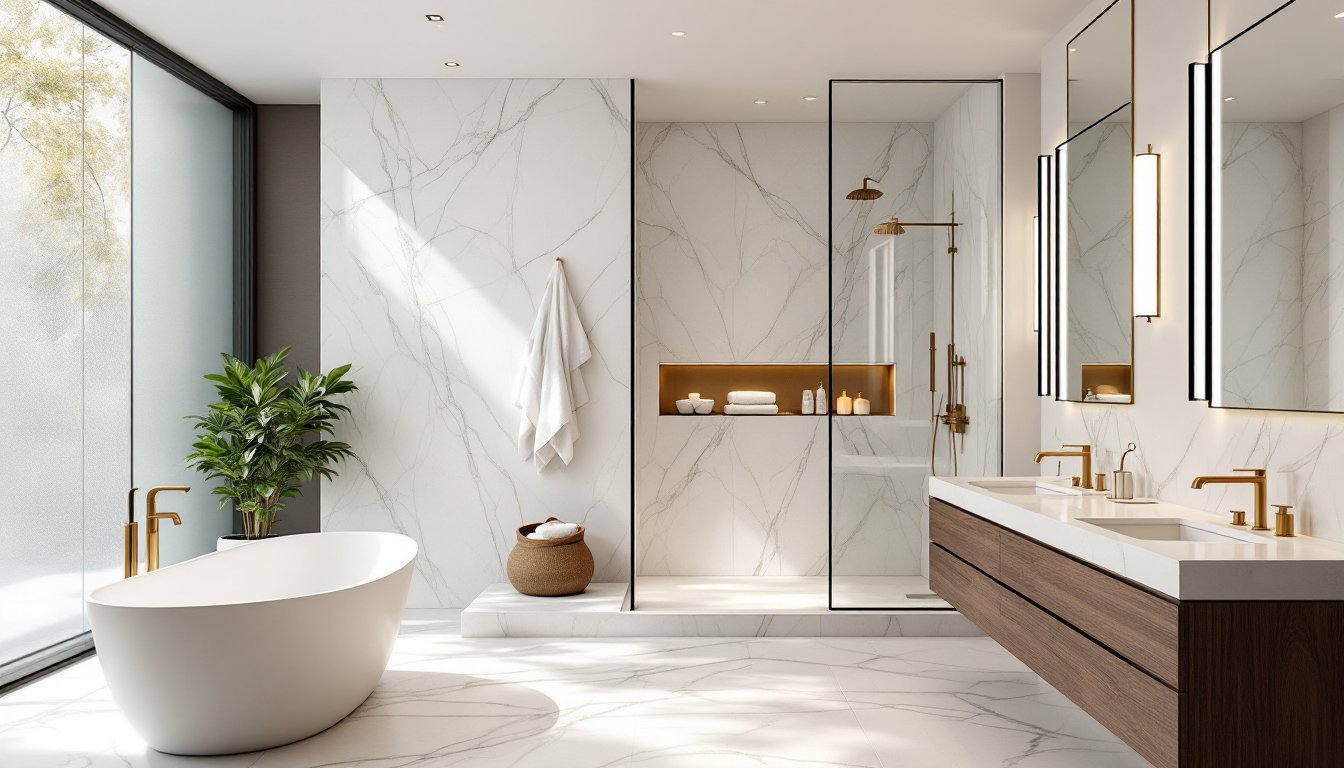
- Create a focal point such as a freestanding soaking tub positioned near windows, a walk-in steam shower with frameless glass, or backlit stone accent walls to anchor the design and deliver spa-level experiences.
- Layer your lighting with task lighting at the vanity (vertical sconces at 60–65 inches), ambient dimmers for mood control, and accent LEDs highlighting architectural features—natural light from skylights or windows elevates luxury further.
- Integrate smart technology including digital shower controls for preset temperatures, heated towel racks, smart mirrors with defoggers, and touchless faucets to add convenience and modern functionality without sacrificing design.
- Choose durable finishes like matte black, brushed gold, or polished nickel across all metal hardware, and ensure heated floors, proper waterproofing, and skilled installation complete the high-end aesthetic.
What Defines a Luxury Bathroom in 2026?
Luxury in 2026 means more than marble countertops and a soaking tub. Today’s high-end bathrooms combine tactile quality, personalized function, and environmental control.
Space and layout matter first. A luxury bath isn’t cramped. Expect a minimum footprint of 80–100 square feet for a primary suite bathroom, with dedicated zones for the toilet, shower, and vanity. Wet rooms with integrated walk-in showers and freestanding tubs are gaining ground, especially in homes where square footage allows.
Craftsmanship and detail work separate the good from the great. Look for flush tile transitions, mitred edge profiles on stone slabs, waterfall countertop edges, and zero-threshold shower entries. These aren’t cosmetic flourishes, they require skilled installation and signal attention to finish quality.
Customization is expected. Built-in niches, heated floors, programmable steam showers, and adjustable lighting all cater to how the homeowner actually lives. Cookie-cutter layouts don’t cut it anymore.
Finally, durability meets beauty. Luxury bathrooms use materials engineered to withstand moisture, heat, and daily use without degrading. Cheap caulk lines, peeling veneers, and tarnished hardware have no place here.
Premium Materials That Elevate Your Bathroom
Material choice is where budget meets impact. Skimp here, and even a well-designed space will feel off.
Marble, Granite, and Natural Stone
Marble remains the gold standard for luxury baths, particularly Carrara, Calacatta, and Statuario varieties. Expect to pay $50–$150+ per square foot installed, depending on the slab’s rarity and vein pattern. Marble is porous, so annual sealing is non-negotiable to prevent staining and etching from acidic cleaners.
For shower walls and floors, use honed marble rather than polished, it’s less slippery when wet. Full-height marble slabs minimize grout lines and create a seamless, gallery-like feel. Watch for water absorption rates: denser marbles like Thassos hold up better in steam showers.
Granite and quartzite offer similar aesthetics with better stain resistance. They’re ideal for vanity tops in family bathrooms where spills are common. Granite typically runs $40–$100 per square foot installed.
Porcelain slabs that mimic natural stone have improved dramatically. Large-format porcelain (up to 10′ × 5′ panels) can be book-matched for a near-identical marble look at half the cost and with better moisture resistance. It’s a smart choice if you want the look without the maintenance burden.
Don’t overlook bathroom tile options in natural stone or high-end porcelain, they’re workhorses that bring both durability and visual punch to wet areas.
High-End Fixtures and Hardware
Faucets, showerheads, and hardware in luxury baths are typically solid brass with PVD (physical vapor deposition) or living finishes that resist tarnish and corrosion. Brands like Kohler, Brizo, and Waterworks offer lifetime warranties on finish and function.
Look for thermostatic shower valves with separate controls for temperature and flow, these maintain water temp even when toilets flush or dishwashers run. Expect to spend $400–$1,200 per valve, not including installation.
Rain showerheads (10″–12″ diameter) and handheld combos are standard. Add body jets if plumbing allows, but confirm your water heater can support simultaneous use, most need at least a 75-gallon tank or a tankless unit rated for 8+ GPM at the desired temp rise.
For tubs, freestanding soaking tubs in cast iron, stone resin, or acrylic dominate luxury installs. Cast iron holds heat longest but requires floor reinforcement, check joist span tables and consider consulting a structural engineer if placing a filled tub (600+ lbs) over a basement or crawl space.
Finish consistency across all metal elements (faucets, towel bars, cabinet pulls, light fixtures) creates visual cohesion. Matte black, brushed gold, and polished nickel are currently favored over chrome.
Statement Features for a Show-Stopping Bathroom
Luxury bathrooms need at least one focal point, a feature that commands attention and anchors the design.
Freestanding tubs positioned in front of windows or beneath statement chandeliers are classic choices. Sculptural models in matte white or polished stone become functional art. Placement matters: ensure adequate clearance (at least 12″ on all sides for cleaning access) and avoid locating tubs directly under ceiling joists unless you add blocking for future grab bar installation.
Walk-in steam showers with frameless glass, built-in benches, and multiple shower zones create spa-level experiences at home. Steam generators typically require a 7’–8′ ceiling height maximum and a fully enclosed space to function efficiently. Budget $2,500–$6,000 for a quality generator plus installation.
Accent walls using bookmatched stone slabs, textured tile, or backlit onyx panels add drama without sacrificing function. Backlit materials require careful planning, install LED panels on dimmers and ensure moisture barriers prevent condensation behind the stone.
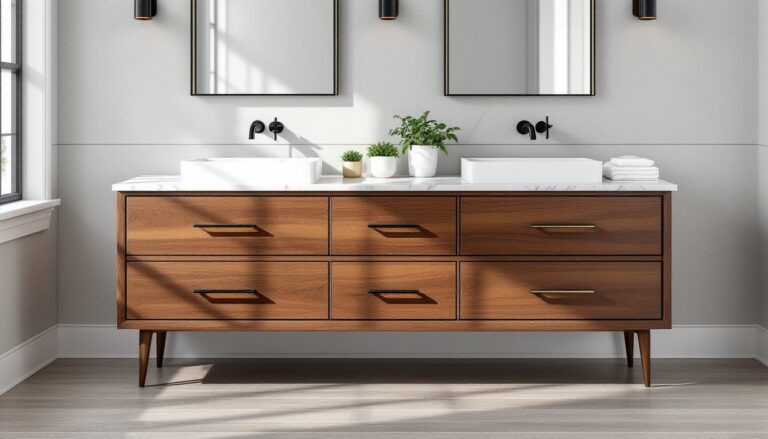
Custom vanities with integrated sinks, floating designs, or furniture-style cabinetry set the tone. Use ¾” plywood carcasses with dovetail joinery, not particleboard. Soft-close hinges and full-extension drawer slides are non-negotiable.
Designers often showcase statement bathroom designs that blend artistic elements with practical function, it’s worth studying how pros balance showpiece features with daily usability.
Heated floors beneath large-format tile feel luxurious underfoot and help dry wet surfaces faster. Electric mat systems cost $10–$20 per square foot and work well in retrofits: hydronic systems are pricier but more efficient in new builds.
Smart Technology and Modern Conveniences
Today’s luxury bathrooms integrate technology that responds to user preferences without adding complexity.
Smart mirrors with integrated LED lighting, defoggers, and touchscreen displays (for weather, news, or music) are becoming standard. Models from brands like Electric Mirror and Séura range from $800–$3,000+ depending on size and features.
Heated towel racks (wall-mounted or freestanding) keep linens toasty and dry. Hardwired models integrate with home automation systems: plug-in versions are easier retrofits. Expect $200–$800 depending on size and finish.
Digital shower controls from Kohler’s DTV+ or Moen’s U allow users to save preferred temperature, spray pattern, and steam settings. Presets can be activated via touchscreen, voice command, or smartphone app. Installation requires both plumbing and low-voltage wiring, plan for this during rough-in.
Touchless faucets with motion sensors reduce germ spread and water waste. Commercial-grade models hold up better than residential versions: look for adjustable sensor ranges and manual overrides.
Integrated sound systems with moisture-resistant ceiling or wall speakers bring music into the shower. Use speakers rated IP65 or higher for wet locations. Many smart bathroom systems now integrate with Alexa, Google Home, or proprietary apps.
Automatic toilet seats with bidet functions, heated seats, air dryers, and night lights range from $400–$2,500. Toto and Kohler lead the category. These require nearby GFCI-protected outlets, something to address during electrical rough-in.
Lighting Design That Sets the Mood
Lighting makes or breaks a luxury bathroom. It’s not one overhead fixture, it’s layered, adjustable, and tailored to tasks.
Task lighting at the vanity should be shadow-free. Vertical sconces flanking the mirror at eye level (roughly 60″–65″ from the floor) provide even illumination for grooming. Avoid overhead-only lighting, which casts harsh shadows under eyes and chin.
Use LED bulbs with a CRI (Color Rendering Index) of 90+ and a color temperature between 2700K–3000K for warm, flattering light. Bulbs rated for damp or wet locations are required near showers and tubs per NEC Article 410.
Ambient lighting from recessed cans, cove lighting, or chandeliers sets the overall mood. Install dimmers on all circuits, this allows bright light for cleaning and soft light for soaking in the tub.
Accent lighting highlights architectural features or materials. LED strips behind floating vanities, toe-kick lighting, or spotlights on textured walls add depth. Low-voltage LED tape is DIY-friendly and energy-efficient.
Natural light is the ultimate luxury. Skylights, large windows, or glass block walls bring in daylight while maintaining privacy. For windows in shower areas, use tempered or laminated glass to meet code. Consider UV-filtering treatments to protect finishes and prevent fading.
Trendsetting interior design publications frequently showcase how lighting transforms spaces, luxury bathrooms use light as a material, not an afterthought.
Safety note: All bathroom lighting within 8 feet horizontally and 10 feet vertically of tubs or showers must be wet- or damp-rated per NEC. Use GFCI protection on all outlets and confirm junction boxes are rated for the fixture weight.